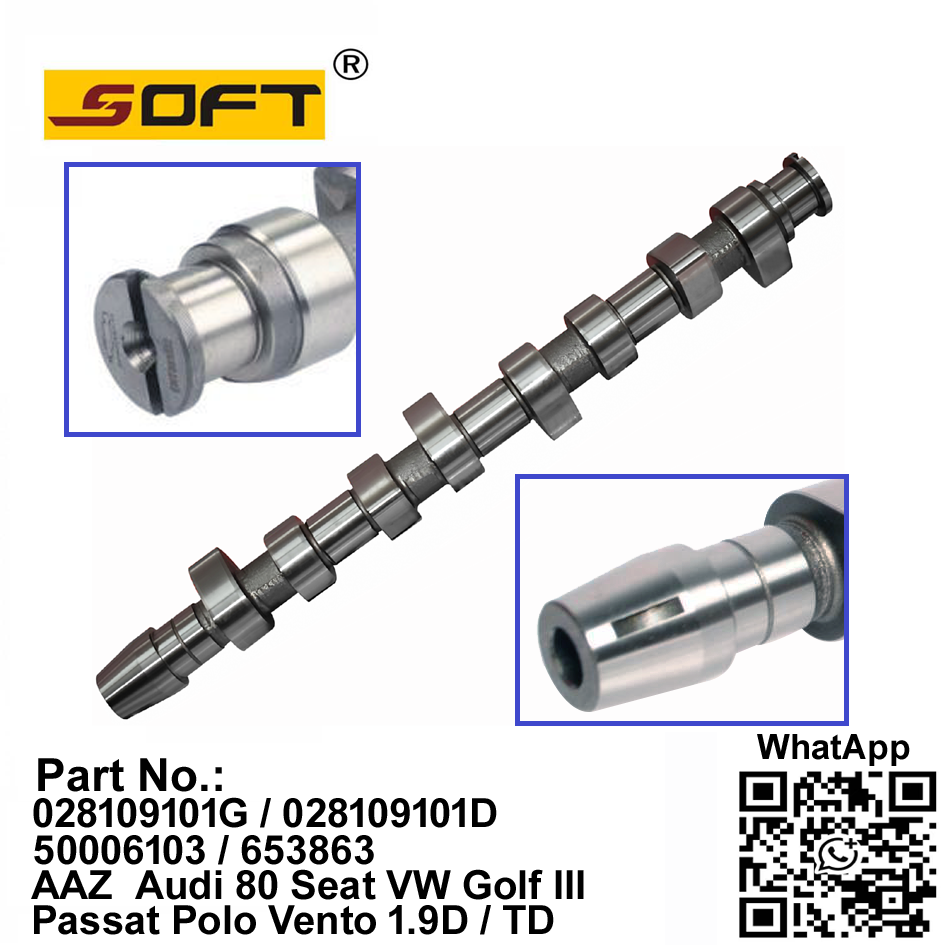
While flashy bolt-on modifications often grab the spotlight, the true mechanical brain dictating your vehicle’s real capability remains hidden deep inside. The camshaft orchestrates every single breath your motor takes. Factory setups inherently prioritize strict emissions compliance, maximum fuel economy, and a whisper-quiet idle. These conservative OEM designs deliberately bottleneck performance and severely restrict volumetric efficiency across the board. Upgrading your engine camshafts is never a simple, one-size-fits-all solution for instant horsepower. Instead, it demands a highly calculated tradeoff between smooth low-end drivability and screaming high-RPM power. You must match specific cam profiles exactly to your overarching build goals. If you choose wisely, you unlock massive potential. Choose poorly, and you risk ruining the driving experience entirely. We will explore how to evaluate and select the perfect profile for your performance build.
Key Takeaways
Engine camshafts dictate the timing, lift, and duration of valve operation, directly controlling the engine's powerband and peak torque.
Selecting the right performance camshaft requires compromising between idle quality, vacuum production, and high-RPM power.
A successful camshaft upgrade is rarely a standalone modification; it necessitates supporting hardware upgrades (valve springs, pushrods) and ECU tuning to prevent catastrophic failure.
Evaluation should be driven by the vehicle's primary application (daily driving, towing, or track use) rather than simply choosing the most aggressive specifications.
How Engine Camshafts Act as the Airflow Bottleneck
Every internal combustion cycle relies entirely on precise timing. The camshaft serves as the mechanical conductor of this process. It synchronizes the intake of the fresh air/fuel mixture and the expulsion of burnt exhaust gases. Engineers call this measurement of airflow efficiency volumetric efficiency (VE). Higher VE translates directly into greater power output. A stock profile limits this efficiency by physically restricting how much air enters the cylinders.
Automakers design OEM camshafts for the general public. They must adhere to rigid global emissions standards. They also prioritize noise, vibration, and harshness (NVH) reduction. Factory engineers design these parts using highly conservative lift and duration numbers. This gentle geometry creates a broad, predictable power delivery. It allows the vehicle to idle smoothly in freezing temperatures or sweltering heat. However, this same conservative design physically chokes the motor when you demand maximum performance.
Swapping out these restrictive factory parts entirely shifts the engine's powerband. Your main performance objective is moving peak torque higher up the RPM range. More aggressive profiles push the valves further open. They also hold them open for a longer period. This enhanced geometry allows the engine to breathe freely at higher engine speeds. The upgrade effectively transforms overall output, turning a sluggish commuter engine into a high-revving powerhouse. You essentially rewrite the mechanical instructions governing your motor.
Core Evaluation Criteria for Performance Camshafts
Evaluating performance profiles requires understanding three fundamental geometric measurements. These metrics define exactly how the component will alter engine behavior.
Lift (Total Valve Opening)
Lift refers to the maximum distance the valve travels off its seat. The cam lobe pushes the lifter upwards, transferring motion through the valvetrain. Increased lift allows a significantly greater total airflow volume to rush into the cylinder. Think of it like opening a window wider. A wider opening lets a larger breeze blow through the room.
Decision factor: Pushing lift numbers higher directly increases potential power output. However, aggressive lift accelerates wear on critical valvetrain components. It puts immense stress on valve springs and lifters. You must ensure your cylinder heads can physically flow more air at these higher lift numbers. Otherwise, the extra lift provides zero additional horsepower.
Duration (Time Valves Remain Open)
Duration tracks the exact time valves remain open during the combustion cycle. We measure this timeframe in crankshaft degrees. Manufacturers advertise duration in two distinct ways. Advertised duration measures the entire time the valve is off the seat. However, this number varies wildly between manufacturers due to differing ramp designs.
Engine builders rely on duration measured at .050-inch lift. This represents the absolute industry standard for comparison. It ignores the slow initial ramp-up time. Using the .050-inch metric allows you to accurately compare profiles across different brands.
Decision factor: Longer duration builds incredible high-RPM horsepower. It gives the cylinder more time to fill at extreme speeds. Unfortunately, it bleeds off precious cylinder pressure at lower engine speeds. This dramatically hurts off-the-line torque and creates a sluggish throttle response around town.
Lobe Separation Angle (LSA) and Overlap
Lobe Separation Angle (LSA) measures the physical distance between the intake centerline and the exhaust centerline. We express this measurement in camshaft degrees. LSA directly influences valve overlap. Overlap happens when both the intake and exhaust valves stay open simultaneously.
Decision factor: A tighter LSA (e.g., 106-110 degrees) increases overlap. This creates that classic "choppy" muscle car idle. It also boosts midrange torque significantly. Conversely, a wider LSA (e.g., 112-116 degrees) smooths out the idle. A wider angle broadens the overall powerband and maintains better manifold vacuum.
The "Cam-Only" Trap: Implementation Risks and Supporting Upgrades
Many enthusiasts fall into the dangerous trap of upgrading the cam while leaving the rest of the engine completely stock. This approach frequently leads to catastrophic mechanical failure.
Valvetrain Geometry & Stress
You must respect the intense stress placed on the valvetrain. Valve float presents the greatest danger here. Valve float occurs when weak factory springs cannot close the valves fast enough at high RPMs. The lifter physically loses contact with the cam lobe. When it slams back down, the resulting crash can instantly destroy the motor. You must strictly match upgraded dual valve springs, lightweight titanium retainers, and hardened chromoly pushrods to your new profile. This ensures complete valvetrain stability.
Piston-to-Valve Clearance (PTV)
Aggressive engine camshafts push valves deeper into the cylinder. They also keep them open much longer. This introduces a severe mechanical risk. The fast-moving valves might physically strike the rising pistons. You must conduct meticulous clearance measurements during installation. Professional engine builders typically use the "clay method." They place modeling clay on the piston crown, rotate the assembly, and measure the compressed clay thickness. This validates safe tolerances before final assembly.
Vacuum Production Realities
Aggressive profiles generate very low manifold vacuum at idle. Factory power brakes rely entirely on this vacuum source to function. If vacuum drops below 14 inches, it can completely disable your power braking assistance. You will experience a terrifyingly stiff brake pedal. To resolve this, you often need an auxiliary electric vacuum pump. Alternatively, upgrading to a hydraulic hydro-boost braking system solves the issue permanently.
Fuel and Air Delivery
Increased airflow directly demands more fuel. You cannot starve the upgraded system. The factory fuel pump and injectors will rapidly reach their maximum duty cycle. Larger fuel injectors, upgraded intake manifolds, and free-flowing exhaust headers become mandatory. These supporting modifications allow you to realize the full potential of your new setup. A massive cam breathes poorly through restrictive factory exhaust manifolds.
Shortlisting Strategy: Matching Cam Profiles to Build Goals
Choosing the correct specifications requires absolute honesty about your primary driving environment. Do not buy a profile just because it sounds aggressive on paper. Follow these established application strategies.
Application 1: Street / Daily Driven (Mild Upgrades)
Criteria: Focus heavily on low-to-midrange torque. You want a smooth, reliable idle for daily stop-and-go traffic. You must maintain high manifold vacuum for power accessories.
Recommendation: Choose a wide LSA (112-116 degrees). Pick a moderate lift. Keep the duration relatively short. This provides a noticeable power bump without ruining daily drivability.
Application 2: Towing / Heavy Load
Criteria: You need maximum low-RPM torque. Reliability is paramount when pulling heavy trailers up steep mountain grades. High-RPM horsepower matters very little here.
Recommendation: Select a very short duration. Pair it with a high lift. This geometry focuses entirely on off-idle pulling power. It gets heavy loads moving effortlessly from a dead stop.
Application 3: Track / Drag Racing (Aggressive Upgrades)
Criteria: The sole focus is peak horsepower at maximum engine speeds. We assume your vehicle utilizes a high-stall torque converter and aggressive rear-end gearing. These drivetrain mods let you skip the low RPM range entirely.
Recommendation: Go for very long duration and maximum lift. Utilize a tight LSA (106-110 degrees) to create massive overlap. The idle will be incredibly rough, but high-end power will be explosive.
The chart below illustrates these typical geometry differences across the three main build applications.
Application Focus
Duration Level
Lobe Separation Angle (LSA)
Idle Quality
Primary Powerband
Street / Daily Driver
Short (e.g., 205°-215° @ .050")
Wide (112° - 116°)
Smooth / Stable vacuum
1,500 - 5,500 RPM
Towing / Hauling
Very Short (under 205° @ .050")
Moderate (110° - 112°)
Very Smooth / High torque
1,000 - 4,500 RPM
Track / Drag Racing
Long (e.g., 230°+ @ .050")
Tight (106° - 110°)
Rough / Choppy
3,500 - 7,500+ RPM
ECU Tuning and Post-Installation Calibration
Installing new hardware solves only half the performance equation. Software calibration determines ultimate success or failure.
The Necessity of Remapping
Physical hardware changes drastically alter internal airflow dynamics. However, the engine control unit (ECU) still expects factory hardware parameters. It utilizes pre-programmed volumetric efficiency tables to deliver fuel. When you change the airflow mechanics, you must alter the software. Professional tuners must adjust specific fueling tables. They must also recalibrate ignition timing advance curves to match the new breathing characteristics.
Consequences of Skipping the Tune
Running an untuned ECU creates immediate drivability nightmares. You will likely experience constant engine stalling at red lights. The massive valve overlap tricks oxygen sensors at idle. This causes the motor to run excessively rich, washing protective oil off the cylinder walls. Alternatively, it might run dangerously lean at high RPMs, potentially melting pistons. Ultimately, skipping calibration means you fail to capitalize on the actual horsepower gains.
Dyno Verification
Always seek professional dynamometer tuning after a major mechanical swap. A dedicated dyno session validates the exact torque curve shift. It allows tuners to monitor data logs safely. They will ensure safe air/fuel ratios across the entire newly established powerband. This controlled environment testing guarantees maximum power output alongside long-term mechanical reliability.
Conclusion
The best camshaft is rarely the one boasting the biggest numbers in a catalog. True performance comes from holistic planning. The ideal profile is mathematically paired to your specific engine displacement, cylinder head flow capabilities, and vehicle weight. A mismatched profile will only create headaches, poor drivability, and sluggish acceleration.
Before purchasing any components, explicitly outline your exact performance goals. Decide where you want the vehicle to make its power. Measure your existing valvetrain parameters carefully. Finally, consult a detailed cam card from reputable manufacturers or speak directly to a professional builder. Treating the upgrade as a complete ecosystem rather than a single part ensures a successful, reliable build.
FAQ
Q: Can I install a performance camshaft without tuning my engine?
A: No. The engine's computer expects factory airflow volumes. Running an aggressive cam on a stock tune will cause stalling, poor drivability, and potentially damaging lean conditions. You must recalibrate fuel and timing tables to match the new hardware.
Q: Why do performance engine camshafts have a "choppy" idle?
A: The rough idle is caused by valve overlap—a brief period where both the intake and exhaust valves are open simultaneously. This reduces idle vacuum and creates the distinct pulsing sound enthusiasts love.
Q: What is the difference between flat tappet and roller camshafts?
A: Flat tappet cams slide directly against the lifter face, requiring specific oil additives for break-in and wear prevention. Roller cams use a small wheel on the lifter to reduce friction. This allows for more aggressive ramp rates and increased long-term durability.
Q: Will a bigger camshaft decrease my fuel economy?
A: Generally, yes. Aggressive cams are optimized for high-RPM performance rather than part-throttle efficiency. The increased valve overlap and higher fueling demands result in higher fuel consumption during normal driving conditions.
Ningbo Dingjia Auto Parts Co., Ltd. is a professional enterprise specialized in manufacturing engine camshafts, connecting rods, crankshafts, and carbon fiber modification parts.