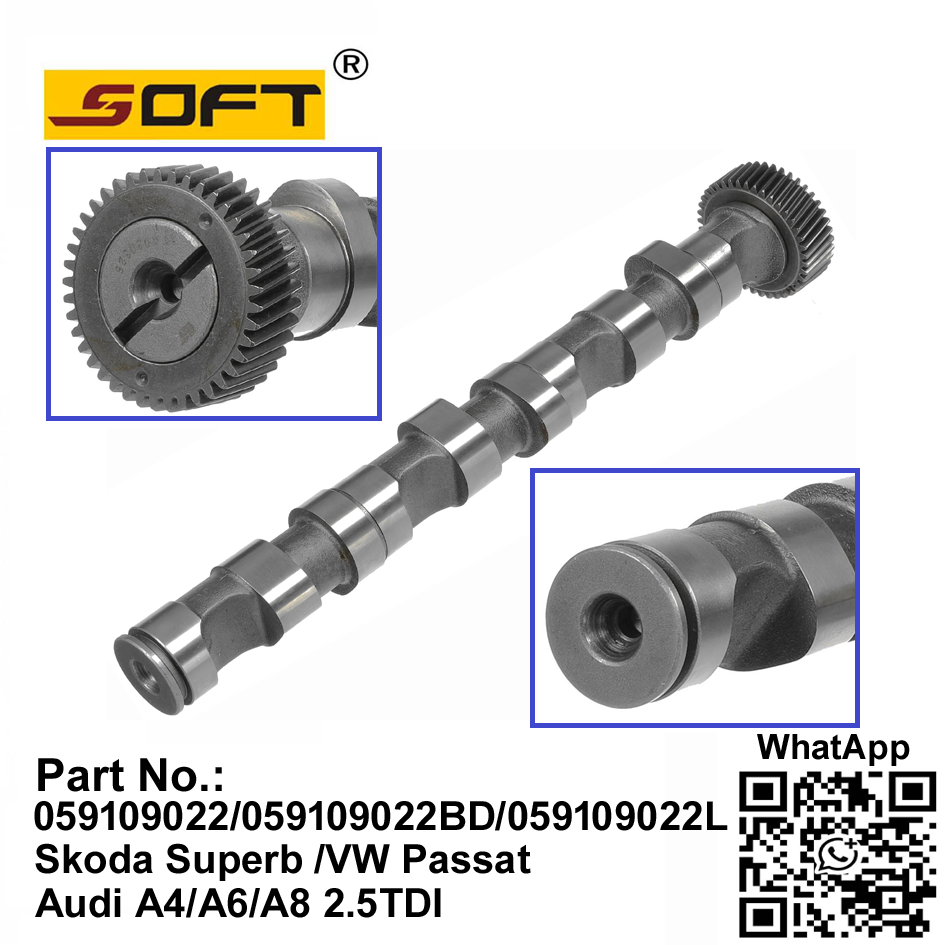
Think of the camshaft as the mechanical brain of your valvetrain. It dictates airflow, shapes power delivery, and ultimately defines how your motor behaves. Every intake stroke and exhaust pulse relies on its precise geometry.
Upgrading or replacing engine camshafts is a high-stakes decision for any builder. A mismatch between the cam profile and your engine block often results in poor drivability, lost torque, or catastrophic valvetrain failure. You need components perfectly synced to your specific hardware.
This guide provides a structured framework for evaluating camshaft options correctly. We will match exact specifications to your operational goals while highlighting ways to mitigate common installation risks. You will learn everything necessary to build a reliable, high-performing setup.
Key Takeaways
Application dictates selection: The vehicle’s weight, gearing, and primary use case must define the target RPM range before looking at camshaft specifications.
Specs work as a system: Lift, duration, and lobe separation angle (LSA) cannot be evaluated in isolation; they directly interact with cylinder head flow and static compression.
Supporting upgrades are mandatory: Aggressive cam profiles require matched valve springs, lifters, and pushrods to prevent valve float and hardware failure.
Clearance and break-in determine survival: Piston-to-valve clearance must be physically verified, and specific break-in protocols are non-negotiable for flat tappet designs.
1. Defining Your Engine Build's Operating Profile
Before purchasing new components, you must establish a mechanical baseline. Start by documenting your current engine displacement. Note your static compression ratio. Map out your cylinder head flow characteristics. These three variables dictate how much air the cylinders can effectively ingest and compress. If you ignore this baseline, you risk installing a profile too large for the heads to support.
Next, determine your success criteria. Your primary use case establishes the required power band and target RPM range. A heavy towing truck needs massive low-end torque peaking around 2,500 RPM. A dedicated drag racing car requires high-RPM horsepower surging past 6,500 RPM. Daily driving demands a smooth idle and broad mid-range response. Define this goal clearly early on.
Vehicle-level dependencies heavily constrain your choices. You cannot select a profile in a vacuum. Evaluate these three critical factors:
Transmission Gearing: Tall rear gears drag down engine speed, requiring a conservative profile to maintain drivability.
Torque Converter Stall Speed: Automatic transmissions need a stall speed matching the power band initiation point.
Vehicle Weight: Heavier chassis demand more low-end torque to get moving from a dead stop.
Finally, account for your vacuum and accessory requirements. Aggressive profiles reduce manifold vacuum significantly. You need adequate vacuum to operate power brakes smoothly. If vacuum drops too low, you must install an auxiliary vacuum pump. Consider existing tuning limitations as well, especially if running factory fuel injection systems.
2. Evaluating Core Types of Engine Camshafts
Builders generally choose between flat tappet and roller designs. Flat tappet options offer lower initial costs. They boast widespread legacy availability for vintage blocks. However, they carry a high risk of rapid wear during break-in. You must use specialized oil additives containing zinc dialkyldithiophosphate (ZDDP) to protect them.
Roller options cost more upfront. Modern engine builds treat them as the standard. They allow for steeper ramp rates and create greater area under the power curve. They also significantly reduce friction and wear. A roller design lets valves snap open faster and stay open longer at peak lift.
Lifter choice represents another major dividing line. Hydraulic lifters provide zero-maintenance operation. They automatically adjust to compensate for thermal expansion. This makes them ideal for street applications. Their main limitation is lifter "pump-up" at extreme RPMs, which can hold valves open unintentionally.
Solid, or mechanical, lifters require periodic valve lash adjustments. You must manually set the clearance using feeler gauges. They remain mandatory for high-RPM racing applications. Solid lifters prevent valve float when engine speeds exceed 7,000 RPM.
You must also navigate the architectural constraints of your engine block. Pushrod (OHV) engines use a single central unit to actuate pushrods and rocker arms. Overhead cam (OHC) configurations place the lobes directly above the valves. Dual overhead cam (DOHC) setups require evaluating primary versus secondary timing events. When upgrading modern DOHC motors, you must often install variable valve timing (VVT) lockouts or phaser limiters to prevent piston interference.
Design Characteristic
Flat Tappet Applications
Roller Applications
Friction Levels
High sliding friction
Low rolling friction
Ramp Rate Limit
Gradual, limited by lifter diameter
Aggressive, allows rapid valve opening
Lubrication Needs
High ZDDP oil additives required
Standard modern oil acceptable
Best Use Case
Budget vintage restorations
High-performance and modern builds
3. Decoding Critical Camshaft Specifications
Understanding specifications is crucial for successful integration. Lift measures exactly how far the valve opens off its seat. Gross lift refers to the theoretical maximum movement. Net lift accounts for valvetrain deflection and lash. Analyzing lift helps you maximize cylinder head flow. You must never exceed the mechanical limits of your valve springs or retainers. Too much lift causes coil bind, destroying the valvetrain instantly.
Duration dictates how long the valve stays open. Manufacturers provide two measurements: advertised duration and duration at .050" lift. Advertised numbers vary wildly between brands due to different measuring standards. Duration at .050" lift serves as the true industry-standard metric for comparing engine camshafts accurately. Increased duration shifts the power band higher into the RPM range. This trade-off degrades low-end torque and produces a rougher idle quality.
The lobe separation angle (LSA) represents the distance in degrees between the intake and exhaust centerlines. You cannot change this angle once ground. A narrow LSA produces peaked mid-range power and a choppy, aggressive idle. A wide LSA generates broader, flatter power delivery and a smoother idle. Factory vehicles typically utilize wide LSAs for emissions and comfort.
Overlap occurs when both the intake and exhaust valves remain open simultaneously. Assessing overlap helps predict exhaust scavenging efficiency. Good scavenging uses outgoing exhaust pulses to pull fresh intake charges into the cylinder. However, excessive overlap severely reduces manifold vacuum. This harms idle stability and power brake function.
4. Implementation Risks and Valvetrain Compatibility
Skipping physical measurements invites disaster. Piston-to-valve (PTV) clearance remains your most critical metric during assembly. You must physically measure PTV clearance prior to final bolting. Builders typically use modeling clay on the piston crown or deploy dial indicators during dummy assembly. A minimum clearance of 0.080" on intake and 0.100" on exhaust is the standard safety margin. Anything less risks catastrophic collision at high RPMs.
Avoid falling into the "cam-only" trap. Upgrading the profile without addressing the surrounding hardware guarantees failure. You must assess the necessity of supporting modifications:
Upgraded Valve Springs: Stock springs cannot handle aggressive lift or high RPMs. Valve float will occur.
Hardened Pushrods: Increased spring pressures will bend factory pushrods under load.
Upgraded Trunnions: Factory rocker arm bearings often spill needle rollers under higher stress loads.
Break-in procedures dictate survival for non-roller options. Strict run-in protocols are non-negotiable. You must coat the lobes in assembly lube. Upon first startup, immediately bring engine speeds between 2,000 and 2,500 RPM. Hold this speed for 20 minutes to ensure adequate splash lubrication. Letting a fresh flat tappet engine idle during this phase causes lobe wiping almost instantly.
Finally, anticipate extensive ECU calibration and tuning needs. Altered valve events change manifold pressure drastically. The engine will require entirely different fueling maps. Carburetor setups will need larger idle circuits and altered accelerator pump cams. Custom mapping manages these new fueling requirements and restores idle stability.
5. Shortlisting Logic and Final Selection
Reading the manufacturer-supplied cam card is your final verification step. This card details every critical timing event. It tells you exactly when valves open and close relative to top dead center. You must interpret these numbers to ensure the centerline aligns with your overall engine building goals. Checking these figures during installation is called "degreeing." Never skip degreeing your new hardware.
"Over-camming" is the most common pitfall in engine building. Novices frequently select massive profiles chasing peak horsepower numbers on paper. In reality, a massive profile destroys drivability. You should always prioritize the area under the power curve over peak numbers. A broad, flat torque curve accelerates a heavy vehicle much faster than a narrow, peaky horsepower curve.
Manufacturer consultation removes guesswork. Leverage your established engine data. Take your head flow numbers, static compression, and vehicle weight directly to technical support reps. They utilize proprietary matching software to finalize verifications. Their daily experience across thousands of builds prevents expensive mismatches.
Once verified, take your next steps decisively. Order a fully matched kit containing the specific lifters, springs, and retainers recommended by the manufacturer. Mixing and matching different brands often causes unexpected valvetrain harmonics. Lastly, schedule your calibration services immediately, as tuning shops often book weeks in advance.
Conclusion
Select profiles based on actual vehicle dynamics, not just isolated engine statistics.
Prioritize matching valvetrain components; an aggressive profile demands upgraded springs, lifters, and pushrods.
Always measure piston-to-valve clearance physically before moving to final assembly.
Choose a slightly smaller, conservative profile rather than risking an undrivable, over-cammed setup.
Consult your engine builder today to review your specific vehicle parameters. Alternatively, call a reputable manufacturer’s technical support line to finalize your selection. Getting expert eyes on your math saves time, money, and hardware.
FAQ
Q: What is the difference between advertised duration and duration at .050"?
A: Advertised duration measures the total time the valve is off its seat, but manufacturers start measuring at different clearances (e.g., .004" or .006"). Duration at .050" lift starts measuring only after the lifter rises exactly fifty thousandths of an inch. This creates a standardized, accurate baseline for comparing different brands directly.
Q: Can I reuse my old lifters when installing a new engine camshaft?
A: You should never reuse old lifters on a new flat tappet core. They wear into the original lobes uniquely, and reusing them will instantly destroy the new metal. You can technically reuse roller lifters if they show zero wear and pass inspection, but replacing them is highly recommended.
Q: How do I know if an engine camshaft is too aggressive for my setup?
A: Symptoms include a severe lack of low-end torque, stalling when shifting into gear, inadequate vacuum for power brakes, and a power band that initiates well above your normal cruising RPM. If the vehicle feels sluggish off the line, you likely over-cammed the engine.
Q: Do I need a custom ECU tune after upgrading my camshaft?
A: Yes. Changing valve timing fundamentally alters how much air the engine ingests and changes idle manifold vacuum. The factory ECU parameters will not deliver the correct fuel volume or spark timing. A custom tune prevents lean conditions, surging, and poor idle quality.
Q: Why is my engine vacuum lower after installing a performance camshaft?
A: Performance profiles increase valve overlap, meaning both the intake and exhaust valves remain open simultaneously for longer periods. This bleeds off cylinder pressure at low engine speeds, drastically reducing the manifold vacuum needed to run power brakes and HVAC accessories.
Ningbo Dingjia Auto Parts Co., Ltd. is a professional enterprise specialized in manufacturing engine camshafts, connecting rods, crankshafts, and carbon fiber modification parts.