Staring at a completely disassembled engine block on the shop floor brings a unique kind of frustration. Finding exact internal replacement parts for modern powertrains often feels like navigating a maze of technical specifications. Picture your vehicle in the service bay with the oil pan removed. The diagnosis reveals a severely scored journal. You need a new rotating assembly. Ordering the wrong component means thousands of dollars in wasted labor and bay time.
Fortunately, shared engineering across modern platforms means a Hyundai Kia crankshaft is frequently interchangeable across different vehicle badges. This interchangeability works perfectly provided the component is matched with absolute precision. In this comprehensive guide, you will learn the exact methodologies professional engine builders use to source these critical components flawlessly.
Key Takeaways
Shared Platforms: Identical engine families are utilized across multiple vehicle lineups. A single rotating assembly design frequently fits various models across both automotive badges.
The 3-Step Matching Rule: The most precise matching method involves decoding the Vehicle Identification Number, verifying the physical Engine Code stamped on the block, and cross-referencing official OEM part numbers.
Common Failures: Spun rod bearings remain a primary reason for requiring a bottom-end rebuild. This issue is particularly noted in specific generations of Theta II engines.
Complementary Replacements: Rebuilders strongly advise against replacing a main rotating component without simultaneously installing new main bearings, rod bearings, and a fresh engine oil pump. This ensures long-term mechanical reliability.
Why Exact Matching is Critical for Engine Integrity
Selecting the correct internal engine components is never a matter of visual approximation. The crankshaft serves as the mechanical heart of the internal combustion engine. It translates the violent linear motion of the pistons into smooth rotational force. Consequently, installing an incorrectly matched unit introduces severe mechanical risks immediately upon startup.
Engine Geometry and Clearances The geometry of this heavy steel component dictates the stroke length of the engine. Even a microscopic millimeter of variance in journal offset drastically alters piston travel. Installing a crank with an excessively long stroke risks the pistons violently striking the valves at Top Dead Center. This interference results in catastrophic internal engine destruction before the vehicle even leaves the driveway.
Balance and Harmonic Vibration Furthermore, these components are meticulously engineered and counterweighted for specific engine displacements and piston weights. An unmatched unit will fail to cancel out the natural harmonic frequencies generated during combustion. In practical terms, this imbalance causes severe engine vibration. Such vibration rapidly accelerates the wear of main bearings and eventually leads to a snapped main journal or a cracked engine block.
Sensor Reluctor Rings Modern engine management systems rely heavily on position sensors to dictate ignition timing and fuel injection. A replacement unit features a reluctor ring pressed onto its rear flange. The tooth count and indexing of this tone wheel must perfectly align with the programming of the Engine Control Unit. If alignment fails, the sensor cannot read the rotational position. The result is a permanent and incredibly frustrating no-start condition.
Decoding Shared Engine Platforms
To truly grasp component compatibility, one must recognize the corporate synergy behind these powertrains. Operating under a unified corporate umbrella, extensive research resources, chassis architectures, and powertrain manufacturing facilities are shared globally.
Because of this shared engineering DNA, many internal components are identical across different showroom floors. Below is an overview of the most prominent shared engine families.
Gamma 1.4L and 1.6L: A staple in compact commuter cars. These are commonly found in the Accent, Elantra, Veloster, Rio, Soul, and Forte.
Theta and Theta II 2.0L and 2.4L: This is the workhorse of the mid-size segment. It powers millions of Sonatas, Santa Fes, Optimas, and Sorentos.
Nu 1.8L and 2.0L: Designed for efficiency, this family is utilized in later model Elantras, Konas, and Souls.
Lambda V6 3.3L and 3.8L: The powerhouse for larger SUVs and premium sedans. Applications include the Palisade, Genesis line, Telluride, and Sedona.
Proven Ways to Match an Engine Component
Relying solely on the year, make, and model of your vehicle is a gamble when ordering internal engine components. Mid-year production changes, factory updates, and trim variations require a much more rigorous verification process.
Using Your Vehicle Identification Number Think of the 17-character Vehicle Identification Number as your car's unique DNA sequence. In North American and many global markets, the eighth digit specifically identifies the exact engine architecture installed on the factory assembly line. Dealership parts departments and advanced online OEM catalogs utilize this full code to filter out incompatible parts automatically. Providing your specific sequence to a supplier ensures the database only displays the exact component machined for your build.
Locating and Reading the Engine Code While the vehicle identification sequence indicates the original factory build, locating the physical engine code stamped on the block is the most foolproof method. This is especially true if you purchased a used vehicle that may have undergone a prior engine swap. This alphanumeric code is typically stamped onto a machined flat pad on the cylinder block right near the transmission bell housing. Mechanics often have to spray this area with brake cleaner and scrub it with a wire brush to reveal the digits. This specific code dictates the exact internal specifications required.
Cross-Referencing OEM Part Numbers Original Equipment Manufacturer part catalogs use standardized formats. Part numbers generally follow a specific five-by-five format. It is crucial to understand the concept of superseded part numbers. Occasionally, automotive engineers update a part to improve durability or fix a known manufacturing flaw. When this happens, the part number changes slightly at the end, but the new robust part remains fully backward-compatible. Cross-referencing ensures you receive the most updated version of the component.
Popular Engine Applications and Compatibility
Analyzing specific applications reveals just how extensive cross-compatibility is within this automotive ecosystem. Knowing these overlaps can significantly broaden your options when sourcing parts.
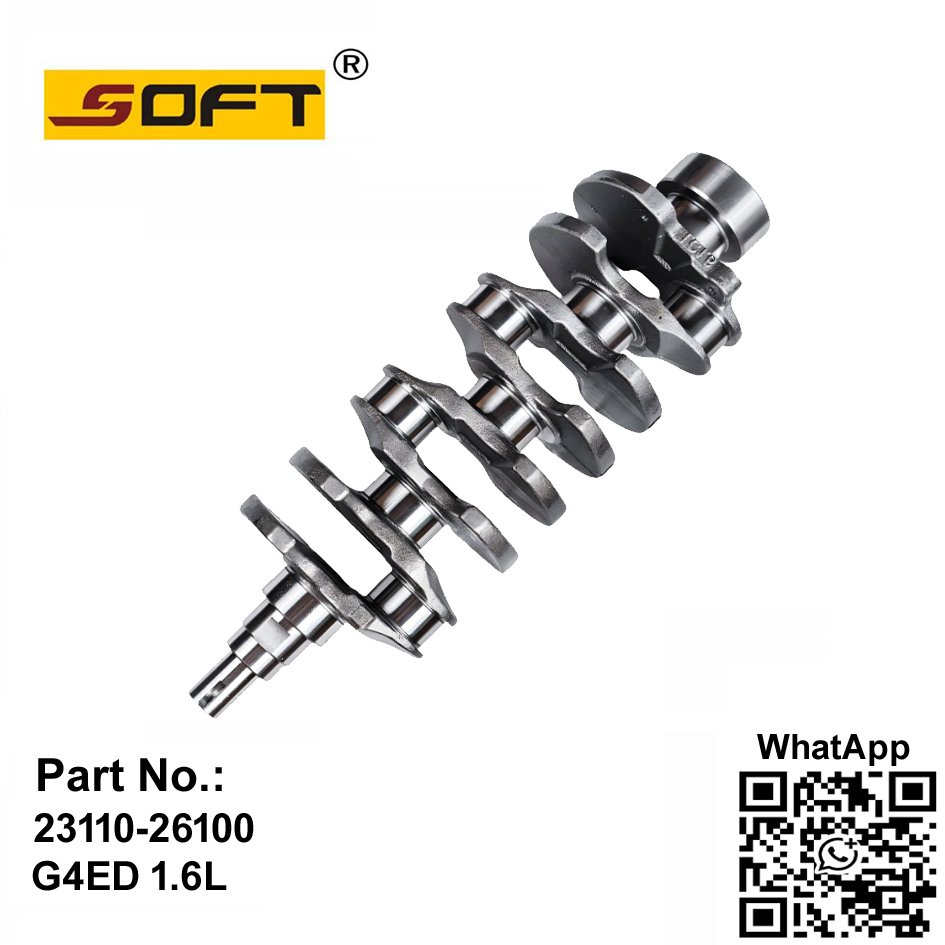
The 1.6L G4ED Engine The G4ED is a highly popular 1.6-liter four-cylinder engine known for its widespread presence in compact vehicles. Because of its massive production run, sourcing an engine crankshaft for Hyundai Elantras and Accents is a routine task for machine shops. For instance, components bearing the OEM part number 23110-26100 are engineered specifically for this 1.6L block. Interestingly, this exact same specification is fully compatible with equivalent models from the same era, such as the Cerato and Spectra. Verifying the G4ED block stamp guarantees perfect fitment across these platforms.
The 2.0L and 2.4L Theta II Engines The Theta II engine family represents one of the most widely distributed powertrains in the modern automotive landscape. The cross-compatibility here is staggering. A crank designed for a 2.4L Sonata is frequently the exact same component required for a 2.4L Optima of the same production year. However, buyers must pay close attention to OEM part number ranges. Critical metallurgical variations exist between naturally aspirated and turbocharged variants.
Industry Trends in Sourcing Engine Components
Looking at the broader automotive aftermarket, the methodology for matching internal engine components is undergoing a significant digital transformation. Historically, rebuilders might have relied on visual comparisons or measuring journal diameters with manual micrometers to find a match. Today, the industry trend leans heavily into artificial intelligence-driven digital cataloging.
As engine architectures become increasingly complex, automakers frequently shift from Multi-Port Injection to Gasoline Direct Injection within the same model year. Consequently, the margin for error has vanished. Industry data shows that heavy component suppliers are investing heavily in predictive cross-referencing software. This investment aims to reduce the high freight costs associated with returns. For consumers and mechanics, this trend means that digital verification using factory databases is no longer just a recommendation. It is the mandatory industry standard for successfully sourcing a replacement rotating assembly.
Symptoms You Need a Replacement
Internal engine components are bathed in oil and designed to last the lifetime of the vehicle. However, lubrication failures, extended maintenance intervals, or extreme wear can necessitate a complete bottom-end rebuild. Recognizing the symptoms early can prevent a localized issue from destroying the entire engine block.
The Spun Bearing Knock One of the most documented mechanical failures is the spun rod bearing. When hydrodynamic lubrication breaks down, metal-on-metal contact occurs. The friction generates immense heat, causing the bearing to momentarily weld to the journal and break free from its locating tang. It then spins violently inside the connecting rod. The primary symptom is a deep rhythmic metallic engine knock that accelerates with engine RPMs. Once a journal is deeply scored, you will undoubtedly need a replacement crankshaft for Kia or equivalent applications.
Low Engine Oil Pressure The engine oil pressure is maintained by the incredibly tight clearances between the main journals and the engine bearings. As these journals wear down over time from abrasive contaminants, the clearances widen. The oil pump can no longer maintain adequate pressure through these enlarged gaps. This typically triggers a flickering red oil pressure warning light on the dashboard, especially at idle when pump volume is at its lowest.
Complete Engine Seizure In worst-case scenarios involving total oil starvation, the heat literally welds the bearings to the journals. The rotating assembly locks up entirely. The vehicle will stall abruptly, the starter motor will simply click, and even a heavy breaker bar on the harmonic balancer bolt will fail to rotate the engine. A seized engine requires a comprehensive teardown. The central rotating assembly is almost always damaged beyond the limits of machine shop repair.
OEM vs. Aftermarket: Choosing the Right Replacement
When the teardown reveals a destroyed bottom end, consumers and mechanics face a critical financial decision. You must choose between sourcing a Genuine OEM component or opting for an aftermarket alternative. Understanding the nuances between these options is vital for a successful rebuild.
Component Type
Metallurgical Quality
Cost Efficiency
Best Application Scenario
Genuine OEM
Factory-spec forged steel or nodular iron. Exact journal hardness.
High cost. Often subject to dealership backorders.
Vehicles under factory warranty or high-performance turbocharged builds.
Premium Aftermarket
Meets or exceeds ISO/TS 16949 standards. Often features improved oil chamfering.
Highly cost-effective. Excellent availability.
Standard daily commuters and out-of-warranty fleet vehicles.
Remanufactured
Original cores machined to undersize dimensions. Requires oversized bearings.
Moderate cost. Requires core return.
Budget repairs where new aftermarket castings are unavailable.
Essential Parts to Replace Alongside Your New Assembly
Replacing a rotating assembly is an invasive and labor-intensive procedure. To ensure the longevity of the repair, several complementary components must be replaced simultaneously. Reusing old wear items is a critical engineering error that invites secondary engine failure.
Main and Rod Bearings Engine bearings are sacrificial components. Old bearings have established a specific wear pattern matched to the old damaged journals. They cannot be reused under any circumstances. When installing your new component, you must select the correct bearing sizes to maintain proper oil clearances.
The Engine Oil Pump When a major failure occurs, microscopic metal shavings are shed directly into the oil pan. The oil pump draws this contaminated oil up. The metallic debris severely scores the tight tolerances of the pump internal gerotor gears. Installing a fresh rotating assembly without replacing the oil pump guarantees that compromised pressure will quickly destroy your new bearings.
Front and Rear Seals Rubber lip seals prevent pressurized engine oil from leaking out of the crankcase. Over time, thermal cycling causes these seals to harden and become brittle. Replacing the rear main seal is incredibly labor-intensive once the engine is bolted back into the vehicle, as it requires transmission removal. Replacing these inexpensive seals while the engine is on the stand is mandatory preventative maintenance.
Thrust Washers These specialized bearings control the lateral movement within the engine block. Excessive lateral movement can cause the reluctor ring to drift away from the position sensor, leading to misfires. Always install new thrust washers to keep the assembly perfectly centered.
Tips for Buying a Replacement Online
The digitization of auto parts catalogs has made sourcing heavy engine components easier. However, it also introduces the risk of ordering the wrong part. Navigating online suppliers requires a methodical and data-driven approach.
Scrutinizing Fitment Lists Never rely solely on generic compatibility charts provided by massive e-commerce platforms. These automated databases frequently contain errors regarding mid-year production splits. Always verify fitment by cross-referencing your specific Engine Code and the OEM part number with the technical data provided by the seller.
Understanding Warranty Limitations Read the fine print carefully. A standard parts warranty typically only covers the cost of the replacement part itself if it fails due to a manufacturing defect. It almost never covers the thousands of dollars in mechanic labor required to remove a defective unit and install a new one.
Navigating Return Policies These are heavy components, often weighing between 30 and 60 pounds. Shipping them is exceptionally expensive. Before clicking purchase, thoroughly review the return policy. If you accidentally order the incorrect part, you need to know who is responsible for the return freight costs and whether a hefty restocking fee applies.
Conclusion
Matching your internal engine parts requires much more than just knowing the year, make, and model of your car. It demands precise identification of the exact engine family, whether that is a G4ED, a Theta II, or a Lambda V6.
Always verify your specific 17-digit vehicle identification sequence and physically check the stamped engine code before ordering components. Furthermore, remember that a successful and long-lasting engine rebuild relies on an ecosystem of fresh parts. Always replace the oil pump, main bearings, and rod bearings concurrently.
By adhering to these rigorous matching standards, you can avoid costly mistakes and get your vehicle back on the road safely. If you are currently facing a bottom-end rebuild and need precision-engineered replacement parts, explore the extensive catalog at https://www.cndingjia.com to find the exact match for your specific engine application.
FAQ
Are the rotating assemblies the exact same across both brands?
In the vast majority of cases, yes. Because these two automotive brands operate under the same corporate umbrella, they share research, development, and manufacturing resources. They utilize identical engine platforms across their vehicle lineups. For instance, the 2.4L engine found in a Sonata is mechanically identical to the one in an Optima. This means their internal rotating assemblies carry interchangeable OEM part numbers.
Can a damaged journal be repaired instead of replaced?
Repairing a damaged unit depends entirely on the severity of the wear. If a bearing has spun but only caused superficial scoring, a professional machine shop can mount the component on a lathe. They can grind the journal to a smaller uniform diameter and utilize oversized bearings to compensate. However, if the scoring is exceptionally deep, or if magnetic particle inspection reveals micro-cracking in the steel, a complete replacement is absolutely mandatory.
Where is the engine code located on the block?
The engine code is a critical piece of diagnostic information permanently stamped into the metal of the engine block. On most modern platforms, this alphanumeric code is stamped onto a flat machined pad located near the area where the engine block mates with the transmission bell housing. Because this area accumulates heavy road grime, technicians often need to clean it with degreaser and a wire brush to make the digits legible.
What causes these heavy internal components to fail?
The most prevalent cause of failure is oil starvation, which compromises the fluid film protecting the bearings. This starvation can result from infrequent oil changes that create sludge, running the engine with low oil levels, or a failing oil pump. Additionally, certain model years experienced documented manufacturing issues where machining debris was left in the engine block. This debris circulated through the oil and prematurely destroyed the rod bearings and journals.
How much does it cost to replace this internal engine component?
The cost varies significantly based on the vehicle model and labor rates in your area. The part itself typically ranges from $200 to $600 for a premium aftermarket unit. However, the labor is the most expensive factor. Because the engine must be completely removed and disassembled, total repair bills often range between $2,000 and $4,500. This is why ensuring you order the exact correct part the first time is crucial.
Can you replace this component without removing the engine?
Technically, on a very small number of older rear-wheel-drive vehicles, it might be possible to drop the oil pan and transmission to sneak the component out. However, for modern front-wheel-drive transverse engine layouts, it is practically impossible. Professional mechanics will always pull the entire engine out of the bay and mount it on an engine stand. This ensures proper cleanliness, accurate torque specifications, and correct bearing clearance measurements.
Ningbo Dingjia Auto Parts Co., Ltd. is a professional enterprise specialized in manufacturing engine camshafts, connecting rods, crankshafts, and carbon fiber modification parts.