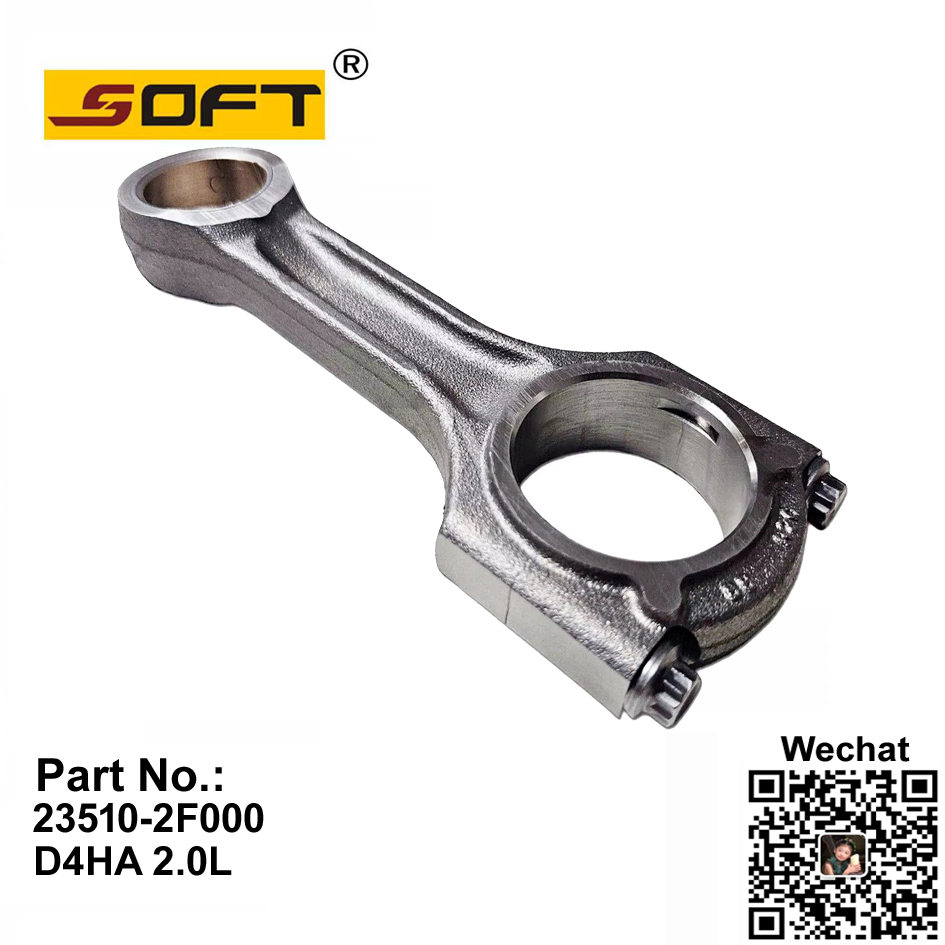
Premature engine failures across specific Hyundai and Kia platforms—including the Sonata, Optima, and various Hybrid/PHEV models—remain a heavily documented issue. These bottom-end failures center on connecting rod and rod bearing degradation. Rebuilding a failed engine requires more than simply swapping damaged parts. Selecting a replacement component without understanding its material composition, tensile strength, and machining tolerances risks repeat catastrophic failure. Engine builders must evaluate metallurgy, bearing compatibility, and structural integrity to ensure a reliable repair. The transition from factory powdered metal to forged steel changes how the engine handles cylinder pressure. Machining tolerances dictate bearing crush and oil clearance. This guide outlines the exact framework for evaluating OEM versus aftermarket options, ensuring your rebuilt engine survives long-term daily driving or increased performance loads.
Material Composition Dictates Lifespan: The shift between powdered metal (sintered) and forged steel directly impacts the rod’s ability to withstand high cylinder pressures and fatigue.
Machining Tolerances are Non-Negotiable: Micro-measurements on the big end bore determine proper bearing crush and oil clearance, which are critical for preventing oil starvation.
Holistic Assembly is Required: A replacement rod is only as reliable as the bearing material paired with it, and catastrophic failures often necessitate replacing the piston and main bearings simultaneously.
Fastener Integrity is Critical: Upgrading or properly replacing rod bolts (often torque-to-yield) is essential to maintain clamping force under thermal stress.
The Core Problem: Why Hyundai and Kia Connecting Rods Fail
Historical Context of Rod Bearing Failures
The automotive industry has closely monitored the bottom-end reliability of specific Korean powertrains. Theta II engines, alongside several Gamma and Nu variants, have faced extensive recalls. The root cause often traces back to manufacturing debris left inside the crankshaft oil passages during the initial machining process at the factory. This metallic debris eventually breaks loose and travels through the engine's lubrication system. The oil pump forces this debris into the main oil galley, down to the main bearings, and through the cross-drilled passages in the crankshaft that feed the rod journals.
Centrifugal force packs this debris into the rod journal oil holes, restricting oil flow. Without adequate hydrodynamic lubrication, the rod bearings overheat, smear, and eventually spin inside the big end bore. Once the bearing spins, the connecting rod loses its designated oil clearance. Metal-on-metal contact ensues, generating extreme heat. The rod eventually stretches, weakens, and fractures, often punching a hole directly through the engine block.
Navigating Recalls and Warranty Limitations
Engine recalls provide a safety net for many owners, but warranty claims face strict scrutiny. Dealerships require unbroken maintenance documentation to approve a free engine replacement. Missing a single oil change receipt or exceeding the recommended mileage interval by a small margin can void the claim entirely. This reality forces many vehicle owners and independent shops into out-of-pocket engine rebuilds.
When undertaking an independent rebuild, relying blindly on standard replacement parts introduces massive risk. Builders must address the root cause of the original failure. Upgrading the oil filtration system, ensuring pristine crankshaft oil galleys through aggressive physical cleaning, and selecting superior internal components become mandatory steps for a successful repair.
Material Fatigue vs. Lubrication Failure
Diagnosing a broken rod requires distinguishing between material fatigue and lubrication failure. Identifying the exact failure mode dictates the required strength of the replacement parts.
Failure Mode
Visual Indicators
Root Cause
Required Action
Lubrication Failure
Blue or black discoloration on the big end; melted bearing material fused to the crankshaft journal.
Oil starvation, blocked oil galleys, or failed oil pump.
Flush all oil passages, replace oil pump, machine crankshaft, install new bearings and rods.
Material Fatigue
Clean break along the rod beam or near the wrist pin; no heat discoloration on the big end.
Excessive cylinder pressure, high RPM stress, or inherent material weakness.
Severely bent rod beam; cracked piston skirts; intact bearings.
Liquid (coolant or fuel) entering the combustion chamber.
Identify fluid leak source, replace bent rod and mated piston, inspect cylinder walls.
Success Criteria for Replacement
A successful bottom-end rebuild achieves specific, measurable outcomes. Engine builders cannot rely on guesswork; they must verify every dimension. The rebuilt engine must handle standard daily driving stresses without accelerating bearing wear. Meeting these criteria requires strict adherence to assembly protocols.
Restore Oil Pressure: The engine must maintain factory-specified oil pressure across all RPM ranges, particularly at hot idle.
Eliminate Bottom-End Noise: The rotating assembly must operate silently, free from knocking or tapping during cold starts and heavy loads.
Verify Clearances: Every journal and bearing must match exact specifications using calibrated micrometers and dial bore gauges.
Ensure Long-Term Durability: The selected components must withstand the intended use case, whether that involves standard commuting or increased boost pressures.
Material Composition: What to Look for in a Hyundai Kia Connecting Rod
Powdered Metal (Sintered) vs. Forged Steel
Factory engines heavily utilize powdered metal, or sintered, connecting rods. Manufacturers press fine metal powder into a mold and heat it until the particles fuse. This process is highly cost-effective for mass production and allows for the "cracked cap" design. The rod cap is fractured off the main body, creating an irregular, interlocking surface that guarantees perfect alignment during assembly. However, sintered metal lacks continuous grain flow. It remains brittle compared to forged steel and struggles to handle sudden spikes in cylinder pressure.
Forged steel rods begin as a solid billet of high-carbon steel or 4340 chromoly. Heavy industrial presses pound the heated metal into shape under immense pressure. This forging process aligns the internal grain structure of the steel, dramatically increasing its resistance to fatigue, bending, and sheer stress. Forged rods handle sudden spikes in cylinder pressure far better than sintered rods. Builders pushing higher horsepower or seeking absolute reliability discard sintered factory rods in favor of forged alternatives.
Material Type
Manufacturing Process
Grain Structure
Best Application
Sintered (Powdered Metal)
Metal powder pressed and heated in a mold.
Discontinuous, porous.
Standard daily driving, naturally aspirated engines.
Forged 4340 Steel
Solid billet pounded into shape under extreme heat and pressure.
Tensile strength measures the maximum stress a material can withstand before breaking. Yield strength measures the point at which the material permanently deforms. Standard naturally aspirated 2.4L engines operate under predictable, moderate loads. Factory sintered rods possess adequate yield strength for these applications, provided lubrication remains constant.
Turbocharged applications, such as the 1.6L Turbo found in many modern platforms, generate significantly higher cylinder pressures. The rapid onset of boost creates violent downward force on the piston and rod. Upgrading to a rod with a higher yield metric prevents the beam from bending under these forced-induction loads. 4340 chromoly steel contains chromium and molybdenum, which increase the hardenability and tensile strength of the alloy, making it the standard for heavy-duty replacements.
Thermal Expansion Rates
Metals expand when exposed to engine operating temperatures. The rate of expansion directly impacts running clearances. Sintered rods, forged steel rods, and aluminum pistons all expand at different rates. If a rod expands faster than the surrounding components, oil clearances tighten. If clearances become too tight, the oil film shears, leading to immediate bearing failure.
Engine builders must factor in the specific thermal expansion rate of the chosen alloy when calculating final assembly clearances. High-performance builds utilizing forged steel often run slightly looser clearances to accommodate the expansion of the metal under extreme heat. Failing to account for thermal expansion guarantees a spun bearing within the first few heat cycles.
Evaluating Kia Replacement Connecting Rod Features vs. Outcomes
Big End Bore Sizing and Machining Tolerances
The big end bore houses the rod bearing and wraps around the crankshaft journal. Exact roundness is mandatory. A Kia replacement connecting rod must feature a big end bore machined to tolerances within ten-thousandths of an inch. If the bore is out-of-round, the bearing will not seat properly. This lack of uniform contact reduces bearing crush.
Bearing crush is the outward radial force that holds the bearing shells securely in place. The bearing shells are manufactured slightly larger than a half-circle. When the rod cap is torqued down, the shells compress against each other, forcing them tightly against the bore walls. Without adequate crush, the bearing spins inside the rod, destroying the engine. Surface finish, measured in Ra (Roughness Average), also plays a critical role in heat transfer from the bearing to the rod body. A rough bore prevents proper heat dissipation.
Wrist Pin and Piston Assembly Compatibility
Connecting rods attach to pistons via wrist pins. Two primary designs exist in modern engines: press-fit and full-floating.
Press-Fit Design: Requires heating the small end of the rod to expand the bore, sliding the pin in, and allowing it to cool and lock. The pin remains stationary in the rod and pivots within the piston.
Full-Floating Design: Uses bronze bushings in the small end of the rod, allowing the pin to rotate freely within both the rod and the piston. Circlips secure the pin inside the piston.
When a rod fails catastrophically, the violent forces usually distort the wrist pin and damage the piston skirts. Replacing a severely damaged rod almost always requires replacing the mated piston to ensure the assembly moves smoothly within the cylinder bore. Reusing a piston that has suffered impact stress invites piston slap and accelerated cylinder wall wear.
Fastener Quality and Clamping Force
Rod bolts hold the assembly together. They endure massive inertial loads every time the piston changes direction at top dead center during the exhaust stroke. Factory engines frequently use Torque-to-Yield (TTY) bolts. These fasteners stretch permanently during installation to provide a specific clamping force.
Upgrading to high-tensile aftermarket fasteners, such as ARP bolts, provides superior clamping force without permanent deformation. High clamping force prevents "cap walk," a condition where the rod cap shifts slightly under load. Cap walk distorts the big end bore, pinches the bearing, and leads to rapid failure. High-quality fasteners ensure the big end bore remains perfectly round under extreme RPM.
Weight Matching and Engine Balancing
Connecting rods must weigh the same across all cylinders. Manufacturers weigh rods end-to-end, balancing the rotating weight (big end) and the reciprocating weight (small end). If one replacement rod is significantly heavier or lighter than the others, it creates harmonic vibrations.
These vibrations travel through the crankshaft, accelerating wear on the main bearings and the oil pump gears. When installing a single replacement rod, builders must weigh it against the existing rods. Often, it is safer and more reliable to install a complete, weight-matched set of four rods to maintain perfect engine balance and eliminate parasitic stress on the rotating assembly.
Connecting Rod Bearing Compatibility and Selection
Tri-Metal vs. Bi-Metal Bearings
Selecting the right bearing material is just as critical as selecting the rod itself. The bearing must support the load while protecting the crankshaft from microscopic debris.
Bearing Type
Material Composition
Characteristics
Best Use Case
Bi-Metal
Steel backing with an aluminum-silicon alloy layer.
Excellent corrosion resistance, hard surface, moderate load capacity.
Standard OEM rebuilds, daily drivers, long-term high-mileage use.
Tri-metal bearings excel in high-load applications. They offer superior embeddability, allowing microscopic debris to sink into the soft babbitt surface rather than scoring the crankshaft. They also provide better conformability, adjusting to slight misalignments under heavy cylinder pressure.
The Ripple Effect: Main Bearings and System Contamination
A failed rod bearing never fails in isolation. As the bearing degrades, it sheds fine metallic flakes into the engine oil. The oil pump picks up this debris and circulates it throughout the entire engine block. The main bearings, which support the crankshaft, are usually the next components to suffer.
When replacing a Hyundai engine connecting rod due to a spun bearing, builders must remove the crankshaft and inspect the main journals. Flushing the oil galleys and replacing the main bearings is mandatory to prevent the residual debris from destroying the newly rebuilt bottom end. Skipping this step guarantees a secondary failure shortly after the rebuild.
Oil Clearance Specifications (STD vs. Oversize)
Oil clearance is the microscopic gap between the bearing surface and the crankshaft journal. This gap holds the pressurized oil film that prevents metal-on-metal contact. Setting the correct clearance requires precise measurement and component selection.
Measure the Crankshaft Journal: Use a calibrated micrometer to measure the outside diameter of the rod journal in multiple locations to check for taper and out-of-roundness.
Determine Bearing Size: Standard (STD) bearings are used when the crankshaft journals measure within factory specifications. If a spun bearing scores the crankshaft, a machinist must grind the journal down to a smooth surface.
Select Oversized Bearings: If the crank is machined, builders must select oversized bearings (e.g., +0.25mm or +0.50mm) to compensate for the removed material and restore the correct oil clearance.
Verify Final Clearance: Install the bearings into the rod, torque the cap to specification, and use a dial bore gauge to measure the inside diameter. Subtract the journal diameter from the bore diameter to find the true oil clearance.
OEM vs. Aftermarket: Conceptual Trade-Offs
OEM Replacements
Using factory original equipment manufacturer (OEM) parts offers distinct advantages for standard rebuilds. OEM parts guarantee exact fitment. They comply perfectly with factory weight specifications, eliminating the need for complex engine balancing if replacing a single unit. For unmodified vehicles used strictly for commuting, OEM rods provide baseline reliability.
However, OEM replacements retain the exact same material weaknesses that led to the original failure. If the engine design is inherently prone to rod fatigue, installing another factory sintered rod simply resets the clock on the next potential failure. Builders must weigh the convenience of OEM fitment against the risk of repeat degradation.
Heavy-Duty Aftermarket Options
Aftermarket forged rods target the weaknesses of factory components. Available in H-beam or I-beam configurations, these rods handle massive torque spikes. High-end aftermarket brands enforce strict quality control, ensuring perfect big-end roundness and precise weight matching out of the box.
The primary drawback involves the required supporting modifications. Upgrading to forged rods often requires purchasing specific aftermarket bearings and paying a machine shop to rebalance the entire rotating assembly. This route is essential for turbocharged builds but requires a larger initial investment in parts and machining labor.
Longevity Analysis
Engine removal and teardown require immense labor. The hours spent disconnecting the wiring harness, dropping the subframe, splitting the transmission, and measuring clearances represent a massive investment. Attempting to save money by purchasing unverified, low-cost replacement parts introduces severe risk.
If a cheap rod features poor machining on the big end, it will spin a bearing within the first thousand miles. The engine must come out again. Prioritizing high-quality metallurgy and a verified Hyundai Kia connecting rod ensures the labor investment yields a durable, long-lasting powertrain. The cost of doing the job twice always exceeds the cost of buying premium parts the first time.
Implementation Risks and Mitigation Strategies
Verifying Clearances During Assembly
Assuming parts fit perfectly out of the box is a critical error. Engine builders must verify every dimension before final assembly. Use a micrometer to measure the exact outside diameter of the crankshaft journal. Use a dial bore gauge to measure the inside diameter of the rod bearing while torqued in the rod.
Plastigage serves as an excellent secondary visual check, but it should never replace proper measuring tools. To use Plastigage, place a small strip across the dry journal, torque the rod cap to spec, remove the cap, and measure the crushed wax against the provided scale. Incorrect clearances lead directly to low oil pressure or immediate bearing seizure.
Managing Torque-to-Yield (TTY) Fasteners
Factory TTY rod bolts stretch plastically when torqued to specification. They do not return to their original length when removed. Reusing TTY bolts is strictly prohibited. A reused TTY bolt acts like a stretched rubber band that has lost its elasticity; it will bottom out in the thread or snap before reaching the required clamping force.
When installing new OEM bolts, builders must follow the exact torque-plus-angle sequence outlined in the service manual. This usually involves a low initial torque setting (e.g., 15 ft-lbs) followed by rotating the bolt a specific number of degrees (e.g., 90 degrees). This sequence stretches the bolt into the plastic deformation zone for maximum clamping force. Failure to execute this sequence accurately results in cap walk and catastrophic failure.
Cleanliness and Break-In Procedures
Engine assembly requires a sterile environment. A single piece of lint or grit trapped behind a bearing shell alters the crush and ruins the clearance. Clean all parts thoroughly with solvent and dry them with compressed air. Apply a high-quality engine assembly lube to the bearings before installing the crankshaft. This lube protects the journals during the initial dry start before the oil pump builds pressure.
Once assembled, fill the engine with a dedicated break-in oil rich in zinc and phosphorus. Follow strict RPM variation protocols during the first 500 miles. Avoid holding a constant RPM on the highway; vary the engine speed to properly seat the piston rings and burnish the bearings. Change the oil and filter immediately after the break-in period to remove assembly debris.
Conclusion
Verify your exact engine code (e.g., GDI, MPI, Theta, Gamma) and model year before ordering any bottom-end components.
Measure the crankshaft journals with a calibrated micrometer to determine if standard or oversized bearings are required.
Source replacement parts only from suppliers that provide transparent material data sheets and verified machining tolerances.
Discard all factory torque-to-yield rod bolts and install brand new fasteners using the exact torque-plus-angle sequence.
FAQ
Q: Will Kia or Hyundai replace my connecting rod under the engine recall?
A: Dealerships may replace the engine under recall if your vehicle falls within the specific VIN range and you provide complete, unbroken maintenance records. Claims are frequently denied if oil change receipts are missing or if the damage is attributed to neglect rather than the manufacturing defect.
Q: Can I reuse connecting rod bolts on a Hyundai Kia engine?
A: No. Factory Hyundai and Kia rod bolts are Torque-to-Yield (TTY). They stretch permanently during their initial installation. Reusing them compromises clamping force, leading to rod cap shift and immediate bearing failure. Always install brand new fasteners.
Q: What is the standard oil clearance for a Hyundai engine connecting rod?
A: Clearances vary strictly by engine code (e.g., Theta II vs. Gamma). Generally, standard oil clearances range between 0.0015 and 0.0025 inches. You must consult the specific factory service manual for your exact engine to ensure proper hydrodynamic lubrication.
Q: Why do Kia connecting rod bearings fail prematurely?
A: Premature failure is often caused by manufacturing debris left in the crankshaft oil passages. This debris restricts oil flow, causing the bearing to overheat, melt, and spin inside the connecting rod, leading to catastrophic engine damage.
Q: Should I replace the piston when replacing a Hyundai Kia connecting rod?
A: If the connecting rod failed catastrophically or bent, the violent forces usually distort the wrist pin and damage the piston skirts. In these cases, replacing the mated piston is mandatory to prevent cylinder wall scoring and ensure proper alignment.
Q: How do I know if my Hyundai Kia connecting rod is bent or damaged?
A: Symptoms include a deep, rhythmic knocking sound from the bottom of the engine that increases with RPM. A bent rod will also cause the piston to sit lower in the cylinder at top dead center, resulting in a severe loss of compression and misfires.
Ningbo Dingjia Auto Parts Co., Ltd. is a professional enterprise specialized in manufacturing engine camshafts, connecting rods, crankshafts, and carbon fiber modification parts.