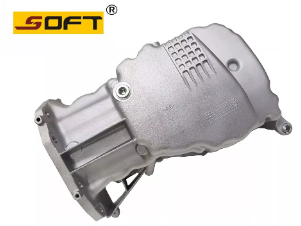
You are probably reading this because you noticed a puddle of dark fluid under your car, heard a loud crunch over a speed bump, or just received a hefty repair quote. Facing potential undercarriage damage is stressful. It is easy to panic when a mechanic mentions complex lubrication system repairs. However, failing to distinguish between a minor gasket weeping and severe structural damage can be a costly mistake. Guessing wrong might lead to overpaying for unnecessary parts or, worse, risking catastrophic engine failure on the highway.
We created this guide to give you a transparent, diagnostic-focused breakdown. We will explore exactly what this vital component does and why it matters. You will learn how to identify critical failures, evaluate replacement materials, and calculate realistic repair costs. By the end, you will have the knowledge to make smart, cost-effective decisions for your vehicle.
Key Takeaways
The oil pan (or oil sump) acts as the reservoir and primary cooling zone for engine oil; driving with a compromised pan risks total engine failure.
Most leaks originate from the gasket or drain plug, not the pan itself—accurate diagnosis is critical to avoid overpaying for unnecessary parts.
When replacement is necessary, evaluating materials (stamped steel, cast aluminum) and capacity (standard vs. deep sump) dictates long-term reliability.
Total Cost of Ownership (TCO) for this repair is heavily skewed toward labor, making the choice of a high-quality replacement part essential to avoid redundant labor costs.

The Role of the Engine Oil Pan in the Lubrication System
The Engine oil pan is the lowest component of your vehicle's crankcase. It bolts securely to the bottom of the engine block. You can think of it as the foundational reservoir of your entire lubrication system. Automotive engineers design it to capture, store, and cool vital fluids. Without this sturdy container, your engine would quickly destroy itself through internal friction.
Its role extends far beyond mere storage. When you start your car, the oil pump forcefully pushes fluid upward through tiny engine galleries. The fluid lubricates pistons, camshafts, and main bearings. Afterward, gravity pulls the scorching fluid back down. It drains directly into the reservoir. As you drive, ambient airflow rushes under the chassis. This surface airflow rapidly cools the hot metal exterior. The heat dissipates into the environment. Finally, the oil pump pickup tube pulls the cooled fluid back up. It cycles this refreshed oil continuously.
In the automotive repair industry, terminology varies by region and manual. You will frequently hear European mechanics refer to this component as an Oil sump. Service documentation and parts catalogs often label it an Oil sump pan. These terms are entirely synonymous. They all represent the exact same critical part protecting your engine internals.
Component Breakdown: Oil Pan vs. Gasket vs. Assembly
Navigating repair quotes is often confusing for vehicle owners. You must differentiate between individual parts to buy exactly what you need. Understanding these distinctions prevents service centers from upselling unnecessary items.
The Metal or Plastic Housing
The core structural container is a rigid shell. Some manufacturer catalogs simply list this bare housing under the term Pan-Oil. This piece contains no extra hardware. It solely provides the physical volume needed to hold the fluid.
The Gasket
The gasket bridges the microscopic gap between the metal housing and the engine block. Manufacturers make these seals from rubber, cork, or liquid Room Temperature Vulcanizing (RTV) silicone. Gaskets fail much faster than the rigid housings. Constant thermal expansion and contraction degrade rubber compounds. Over years of driving, the material hardens, shrinks, and eventually leaks.
The Complete Assembly
Purchasing an entire Oil pan assembly provides a comprehensive solution. This full package includes the main housing, a pre-fitted gasket, a new drain plug, a crush washer, and internal baffles. Baffles are crucial. They act as metal walls inside the reservoir. They prevent fluid from sloshing away from the pickup tube during aggressive cornering or steep inclines.
Decision Logic: What Should You Buy?
Use the following comparison chart to decide which repair path makes financial sense for your specific situation.
Failure Symptom | Recommended Purchase | Reasoning |
Slow, weeping leak around the upper rim. No physical dents. | Gasket Only | Normal aging. The rubber has hardened. The structural housing remains perfectly flat and reusable. |
Deep dent from a rock or speed bump impact. | Full Assembly | Structural warping occurs upon impact. A dent can block the pickup tube, starving the engine of lubrication. |
Stripped drain plug threads. | Full Assembly | Re-tapping threads is risky. Metal shavings can enter the engine. A new unit guarantees a tight seal. |
Heavy rust and porous weeping on a steel unit. | Full Assembly | Corrosion weakens the entire structure. Patching rust is a temporary, unreliable fix. |
Common Mistake: Many DIY mechanics try to fix a warped flange by applying excessive liquid silicone. Thick layers of RTV squeeze into the reservoir when tightened. These hardened silicone beads eventually break off, clog the pickup tube screen, and destroy the engine.
Diagnostic Criteria: Identifying Structural Failure vs. Minor Leaks
Accurate diagnosis saves you money. You must trace the symptoms back to their actual source. Many drivers mistake upper engine leaks for lower reservoir failures simply because fluids travel downward.
Symptom Mapping and Real-World Pain Points
Impact Damage: You might bottom out on a steep driveway. Debris might strike the undercarriage on the highway. This causes punctures or deep dents. You must replace dented units immediately. A crushed bottom surface presses directly against the internal oil pickup tube. This creates a severe choke point, starving the engine of lubrication even if no fluid leaks out.
Corrosion and Rust: Steel components face severe environmental exposure. Winter road salt accelerates oxidation. This causes slow, persistent weeping. The metal eventually becomes porous, allowing fluid to sweat straight through the bottom.
Stripped Drain Plugs: Quick-lube shops frequently over-torque drain plugs using pneumatic tools. This aggressive tightening strips the delicate threads. It creates a localized drip directly at the plug head.
Evaluating the Financial Risk
Understanding the business case for immediate repair is vital. A compromised housing is an urgent threat. The part itself might only cost $150 to $300. However, ignoring a heavy leak drains your system dry. Running an engine without lubrication destroys internal bearings in minutes. A minor delayed maintenance task suddenly transforms into a $5,000 engine replacement.
Visual Inspection Checklist
Gravity is deceptive. Fluids naturally travel down the engine block and collect at the lowest point. Follow this checklist before ordering parts:
Check the Valve Cover: Look at the very top of your engine. If it is wet, the fluid is likely dripping down onto the lower components.
Inspect the Main Seals: Look specifically between the engine block and the transmission housing. A failed rear main seal mimics a lower reservoir leak perfectly.
Clean and Dye: Wipe the entire undercarriage down with brake cleaner. Add a specialized UV dye to your engine fluid. Drive for twenty minutes. Use a UV flashlight to reveal the exact pinpoint source of the fresh leak.
Material and Design Evaluation for Replacements
Automakers utilize various materials based on vehicle weight, cost, and intended application. When buying a replacement, matching the material to your driving style and OEM specifications dictates long-term reliability.
Evaluating Solution Categories
Stamped Steel: This is the most traditional and cost-effective material. Stamped steel handles impacts relatively well. When struck by a rock, it tends to bend or dent rather than shatter. However, steel is highly vulnerable to rust. If you live in a snowy climate where road salt is prevalent, inspect steel units annually for corrosion.
Cast Aluminum: Engineers prefer cast aluminum for performance vehicles. It offers superior heat dissipation. Aluminum acts as a highly efficient heat sink, pulling extreme temperatures away from the fluid. It is also incredibly rigid, providing a perfectly flat mating surface for the gasket. Unfortunately, aluminum is brittle. A heavy impact will crack or shatter the housing instantly, dumping all fluid onto the road.
Composite and Plastic: Modern vehicle manufacturers increasingly use high-strength plastics to reduce vehicle weight and improve fuel economy. They do not rust, and they resist minor impacts well. However, plastic requires strict adherence to factory torque specifications during installation. Overtightening the mounting bolts permanently warps the plastic flange. Once warped, it will never seal correctly again.
Capacity Considerations: Standard vs. Deep Volume
You must also consider fluid capacity. Standard commuter cars require standard volume units. However, heavy-duty applications demand specialized parts. A deep Oil Pan holds significantly more fluid. Diesel engines and heavy towing trucks generate immense internal heat. An increased fluid volume distributes this thermal load efficiently. It reduces thermal breakdown, prevents premature viscosity loss, and safely extends your service intervals.
Best Practice: Always check your vehicle’s ground clearance before upgrading to a deep-capacity unit. A lower-hanging reservoir increases your risk of striking road debris or bottoming out on uneven terrain.
TCO, Labor Risks, and the Repair vs. Replace Decision
The true cost of this repair often surprises vehicle owners. The physical part is generally inexpensive. You can easily find high-quality replacements online. However, the labor rate serves as the primary driver of your Total Cost of Ownership (TCO).
Understanding Cost Drivers
Imagine purchasing a replacement unit for $100. This seems affordable. Yet, your mechanic quotes you $850 for the complete job. This discrepancy happens because lower engine access is notoriously difficult. On many modern front-wheel-drive vehicles, the exhaust pipe routes directly underneath the engine. In other designs, the vehicle subframe or steering rack blocks access completely.
Mechanics often spend five to six hours simply removing peripheral components before they can unbolt the leaking unit. At an average labor rate of $150 per hour, the installation effort vastly outweighs the material cost.
OEM vs. Aftermarket Shortlisting Logic
Because labor is so expensive, your part selection strategy is critical. It is tempting to buy the cheapest aftermarket option available. Saving $30 on a budget brand seems like a smart financial move initially. In reality, it is a terrible return on investment.
Low-quality aftermarket units frequently suffer from poor manufacturing tolerances. Their mounting flanges are rarely perfectly flat. When the mechanic installs a warped unit, it creates a secondary leak almost immediately. You will then have to pay that massive six-hour labor bill a second time to fix the new leak.
Always shortlist replacements based on strict OEM standard compliance. A perfectly machined mating surface ensures a permanent seal. Investing slightly more upfront for premium precision eliminates the risk of redundant labor costs.
Conclusion
Navigating an undercarriage leak requires patience and accurate observation. We have covered the essential mechanical functions, the distinct individual components, and the economic realities of replacement.
Diagnose Accurately: Always trace the leak to its absolute source before purchasing parts. Clean the area thoroughly to ensure a rear main seal leak is not deceiving you.
Match the Material: Choose a replacement material that aligns exactly with your OEM specifications. Consider upgrading to a higher capacity if you frequently tow heavy loads.
Prioritize Quality: Never compromise on gasket quality or flange flatness. The immense labor costs involved in this repair make cheap aftermarket parts a dangerous gamble.
Your immediate next step is simple. Walk out to your vehicle, check your fluid dipstick to ensure safe operational levels, and physically inspect your undercarriage with a flashlight. If you spot fresh drips or deep metal scarring, consult a certified technician for a pressure test immediately. Proactive maintenance today prevents catastrophic engine failure tomorrow.
FAQ
Q: What is the difference between an oil pan and an oil sump?
A: They are mechanically the exact same thing. The terminology just varies by region and industry. Automotive professionals in North America generally say "pan," while European manuals and industrial mechanics prefer the term "sump." Both refer to the reservoir bolted to the bottom of the engine block.
Q: Can you drive with a dented oil pan?
A: It is highly risky. Even if there is no active leak, a deep dent pushes the metal floor upward. This can block the internal pickup tube screen. A blocked tube starves the engine of lubrication, causing severe internal friction and potential engine seizure.
Q: How long does it take to replace an oil pan assembly?
A: The timeline varies heavily by vehicle design. On a simple rear-wheel-drive truck, a mechanic can finish the job in about one hour. On modern compact cars, they must drop subframes or steering components, pushing labor times beyond six hours.
Q: Can a stripped oil pan drain plug be fixed without replacing the whole pan?
A: Yes, as a temporary measure. Mechanics can tap new oversized threads or install a specialized piggyback plug. However, cutting new threads introduces metal shavings into the reservoir. Full replacement remains the safest, most reliable long-term solution.