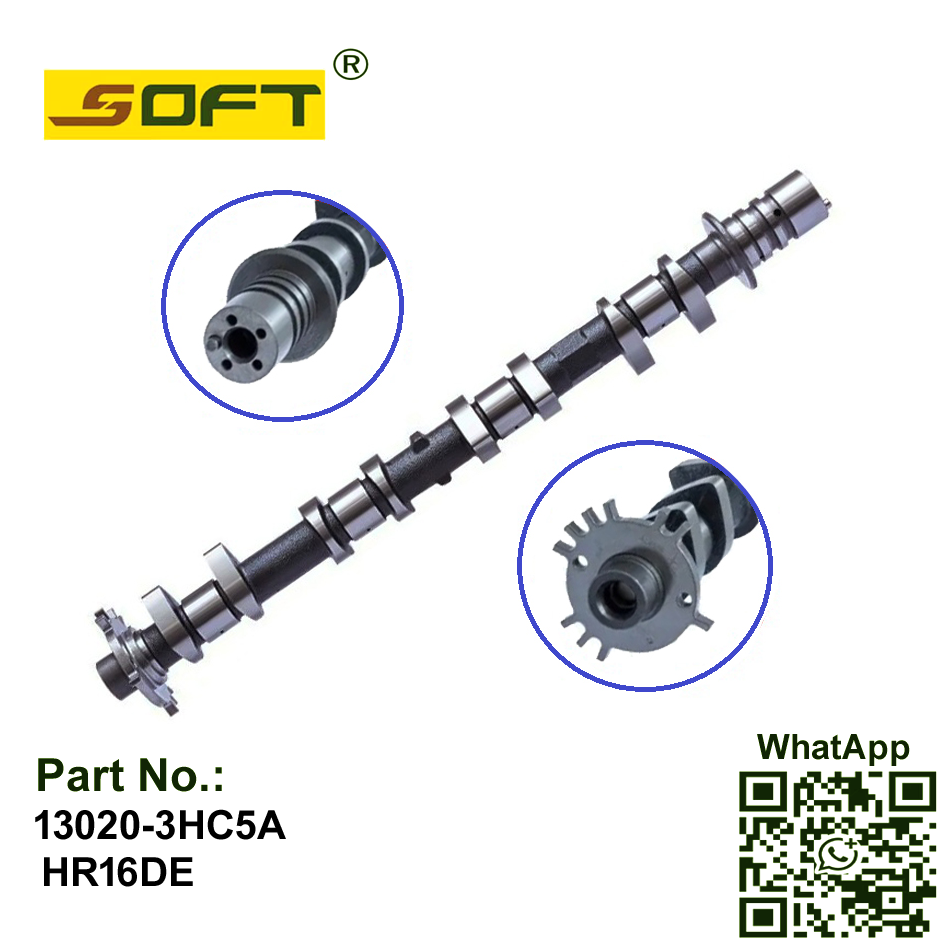
Selecting a camshaft dictates exactly how an engine breathes. A precise match unlocks optimal volumetric efficiency, maximizing airflow into the combustion chamber. A mismatch risks catastrophic piston-to-valve contact, destroying the valvetrain instantly. Nissan’s diverse engine architectures—spanning decades of SOHC, DOHC, and variable timing configurations—make camshaft selection highly complex. Builders and mechanics often struggle to align cam specifications like lift and duration with specific engine blocks, ECU capabilities, and intended vehicle use. You cannot guess your way through valvetrain geometry. Throwing an aggressive profile into a stock block rarely works. This guide provides a technical evaluation framework for matching a camshaft to your specific engine. We compare OEM replacements against aftermarket profiles, detail the required supporting modifications, and outline the harsh realities of valvetrain installation.
Engine Architecture Dictates Selection: Compatibility relies entirely on identifying your specific Nissan engine code (e.g., VQ35DE vs. VQ35HR) and understanding its valvetrain layout (SOHC vs. DOHC).
Variable Timing Complexity: Upgrading a Nissan intake camshaft requires verifying compatibility with factory Variable Valve Timing Control (VTC/CVTC) systems to prevent timing faults and mechanical binding.
Spec Matching is Non-Negotiable: Evaluating lift, duration, and lobe separation angle (LSA) against factory piston-to-valve clearances is required to avoid engine failure.
Installation Realities: While some DOHC cam swaps can be performed without removing the cylinder heads, strict adherence to Top Dead Center (TDC) alignment, correct crankshaft positioning, and tensioner arresting protocols is mandatory.
Identifying Your Specific Engine Code and Generation
You must start by identifying the exact engine family sitting in your engine bay. Nissan engine families like the SR, KA, VQ, VR, VK, and RB all feature drastically different valvetrain geometries. An SR20DET uses a rocker arm setup with hydraulic lash adjusters. A VQ35DE uses direct bucket actuation. You cannot apply valvetrain logic from one family to another. The physical dimensions of the camshafts, the required clearances, and the lubrication demands vary wildly across these platforms. If you over-rev an SR20DET with aggressive cams and stock rocker guides, you will throw a rocker arm through the valve cover. A VQ engine does not have this specific vulnerability, but it requires meticulous bucket sizing.
Generational differences within the same engine family complicate matters further. Take the VQ series as a prime example. The VQ35DE, VQ35HR, and VQ37VHR might sound similar, but their internal components do not interchange. A Nissan camshaft designed for a DE will not fit an HR block. The camshaft journal sizes differ significantly. Sensor targets on the back of the cams change to accommodate upgraded ECU logic. Even the sprocket mounting points and dowel pin locations shift between generations. Always verify the exact alphanumeric engine code stamped on the block before ordering parts.
To illustrate the diversity across Nissan platforms, review the mechanical differences in the table below. This dictates your baseline approach to valvetrain modification.
Engine Code
Valvetrain Layout
Actuation Type
Variable Timing
SR20DET
DOHC 16-Valve
Rocker Arm / Hydraulic
VTC (S14/S15 only)
KA24DE
DOHC 16-Valve
Direct Bucket / Shim
None
VQ35DE
DOHC 24-Valve
Direct Bucket / Solid
Intake CVTC (Rev-up adds Exhaust)
RB26DETT
DOHC 24-Valve
Direct Bucket / Solid
None
SOHC vs. DOHC Valvetrain Constraints
Single Over Head Cam (SOHC) engines present unique limitations. Engines like the KA24E, VG30E, or the GA16i utilize a single shaft to operate both the intake and exhaust valves. Because both profiles are locked onto one physical piece of steel, you cannot adjust the intake timing independently of the exhaust timing. Your tuning flexibility is severely restricted. You must rely entirely on the cam grinder's predetermined lobe separation angle. If you want to shift the power band, you have to replace the entire unit. You cannot simply bolt on an adjustable gear and dial in more overlap.
Dual Over Head Cam (DOHC) engines offer vastly superior tuning flexibility. Platforms like the SR20DET, RB25DET, and the entire VQ series utilize separate shafts for intake and exhaust duties. This layout requires matching a distinct Nissan intake camshaft with a complementary exhaust camshaft. You can advance the intake side while retarding the exhaust side using adjustable gears. This independent control allows engine builders to dial in precise valve overlap, optimizing airflow for either low-end torque or high-RPM horsepower. You can physically degree the cams using a dial indicator to hit exact opening and closing events.
2. Solution Categories: OEM Replacement vs. Aftermarket Upgrades
OEM Nissan Camshafts (Baseline Restoration)
Sometimes the factory specification remains the best choice. OEM replacement is required when you need strict emissions compliance or flawless daily drivability. If a timing chain snaps and bends valves, restoring a damaged factory valvetrain often means reverting to OEM cams. Factory profiles guarantee a smooth idle, excellent vacuum for brake boosters, and perfect integration with the stock engine management system. They prioritize longevity and consistent performance over peak output. A factory VG33E cam will idle perfectly at 750 RPM in traffic without stalling.
You must locate and verify factory OEM cam specs before making any decisions. Open the specific Factory Service Manual (FSM) for your exact engine code. Navigate to the Engine Mechanical (EM) section. Here you will find the baseline lift and duration numbers. Compare these figures against any potential replacements. Knowing your factory baseline is the only way to accurately measure how much an aftermarket profile will change your engine's behavior. If your factory duration is 240 degrees, jumping straight to a 280-degree profile will completely alter the engine's character.
Mild aftermarket cams offer a balanced approach to engine building. These profiles feature slight increases in lift and duration compared to the factory units. Manufacturers design them specifically to operate within factory ECU parameters. In many cases, you can run them using the stock valve springs, saving considerable time and labor during installation. They are often marketed as "drop-in" upgrades because they require minimal supporting modifications. A common mild profile might push duration from 240 to 256 degrees, with a lift increase of less than 1 millimeter.
The trade-offs with mild profiles are generally favorable for street cars. You gain improved mid-range torque with minimal impact on idle vacuum. The engine still pulls smooth vacuum at idle, keeping your power brakes functional and the idle steady. These profiles allow for tuning adjustments down low to maintain daily drivability. You get a noticeable bump in acceleration without turning the vehicle into a temperamental track car. You will not need to raise the idle RPM to keep the engine running at stoplights.
Aggressive profiles are built for one purpose: maximum airflow at high engine speeds. These cams feature high-duration and high-lift designs that push the mechanical limits of the cylinder head. You cannot drop these into a stock engine. They require extensive valvetrain upgrades, including dual valve springs, titanium retainers, and often solid lifter conversions. Furthermore, a stock ECU cannot comprehend the massive increase in airflow. Standalone engine management is mandatory. Profiles in the 272-degree to 288-degree range fall into this category.
You sacrifice low-end power and idle stability when installing aggressive cams. The extreme valve overlap causes a choppy, erratic idle. Engine vacuum plummets, often requiring auxiliary vacuum pumps for brake boosters. The power band shifts violently to the right side of the tachometer. Below 4,000 RPM, the engine may feel sluggish. However, once you hit the upper RPM ranges, these cams deliver peak high-RPM horsepower necessary for competitive track use. The engine will pull hard all the way to the rev limiter.
3. Evaluation Dimensions: Matching Specifications to Engine Capabilities
Analyzing Lift, Duration, and Lobe Separation Angle (LSA)
Understanding camshaft specifications dictates how your engine will perform. Lift refers to the maximum distance the valve opens off its seat. Increased lift allows more air and fuel mixture into the combustion chamber. Duration measures how long the valve stays open, measured in degrees of crankshaft rotation. Increasing duration shifts the power band higher in the RPM range. The valve stays open longer, allowing the engine to breathe effectively at high speeds, but sacrificing velocity at low speeds. A 264-degree cam behaves very differently than a 280-degree cam.
Lobe Separation Angle (LSA) determines the distance between the centerline of the intake lobe and the centerline of the exhaust lobe. LSA directly impacts valve overlap—the brief period when both intake and exhaust valves are open simultaneously. A tighter LSA (e.g., 108 degrees) increases overlap, creating a choppy idle and strong mid-range torque. A wider LSA (e.g., 114 degrees) smooths out the idle and builds better top-end power. Turbocharged Nissan engines prefer a wider LSA to prevent boost pressure from blowing straight out the exhaust valve during overlap.
The Role of the Intake Camshaft in VTC/CVTC Systems
Modern Nissan powerplants rely heavily on Continuously Variable Valve Timing Control (CVTC). This system uses oil pressure to physically rotate the intake camshaft independently of the timing sprocket. The ECU commands a solenoid using a Pulse Width Modulation (PWM) signal to direct oil flow, advancing or retarding the intake timing on the fly. This provides smooth idle quality, strong low-end torque, and excellent high-RPM breathing. It eliminates the traditional compromises of fixed camshaft timing found in older engines like the VG30DETT.
Selecting an intake cam for a VTC-equipped engine requires careful evaluation. You must decide whether to retain VTC functionality or lock it out. For street and mild track cars, retaining VTC provides the best power curve. The aftermarket cam must have the correct oil galleys and dowel pin locations to accept the factory VTC phaser. For dedicated drag racing or extreme track applications, builders often lock out the VTC mechanism entirely. This prevents the timing from fluctuating under extreme stress and allows for fixed, highly aggressive timing maps.
Piston-to-Valve Clearance and Mechanical Limits
Pushing lift and duration increases the risk of the valves hitting the pistons. You must measure piston-to-valve (PTV) clearance before finalizing any engine assembly. Never trust manufacturer claims blindly; stack tolerances between the block deck, head gasket, and cylinder head milling can drastically alter clearances. The danger zone for contact usually occurs between 10 degrees before and 10 degrees after Top Dead Center during the overlap phase.
Follow this strict procedure to measure PTV clearance using the clay method during your engine mock-up phase:
Remove the spark plugs to eliminate engine compression.
Apply a 1/4-inch thick strip of modeling clay across the valve reliefs on the top of the piston.
Install the cylinder head using the old head gasket and torque it to spec.
Install the timing gear, set the mechanical timing, and install the timing belt or chain.
Rotate the crankshaft manually through two full 360-degree revolutions. Do not force it if you feel hard resistance.
Remove the timing gear and unbolt the cylinder head.
Slice the compressed clay in half with a razor blade and measure the thickness with digital calipers.
Most engine builders recommend a minimum of 0.080 inches on the intake side and 0.100 inches on the exhaust side. If your chosen Nissan engine camshaft pushes the valves closer than these thresholds, you have hit a mechanical limit. You must either select a smaller cam or install aftermarket pistons featuring deeper valve reliefs.
4. Overall Value Influencing Factors: Required Supporting Modifications
Valvetrain Upgrades: Springs, Retainers, and Adjustable Gears
Increased cam lift forces the valve spring to compress further than the factory intended. If you exceed the stock spring's maximum compression, you will experience coil bind. Coil bind occurs when the spring coils touch each other solidly, snapping the spring and dropping a valve into the cylinder. Upgrading to stiffer valve springs is mandatory for high-lift profiles. Stiffer springs also prevent valve float at high RPMs. Valve float occurs when the spring cannot close the valve fast enough to keep up with the cam lobe, resulting in severe power loss and potential mechanical damage.
Aggressive cam profiles often require transitioning from hydraulic lifters to solid lifters. Hydraulic lifters pump up with oil pressure to maintain zero valve lash. However, under extreme RPMs and aggressive ramp rates, hydraulic lifters can collapse or pump up excessively, holding the valve open. Converting to a solid lifter (shim-under-bucket) setup provides precise valve control. This requires manually measuring and setting the clearance for every single valve using precision shims. Finally, adjustable cam gears allow you to mechanically dial in the power band, making precise timing adjustments to optimize overlap.
ECU Tuning and Fuel System Demands
Mechanical installation is only half the job. Altering camshaft duration fundamentally changes how the engine breathes. The factory ECU expects a specific volume of air at a specific RPM. The new camshafts throw those calculations out the window. You must recalibrate the ECU’s volumetric efficiency (VE) tables and adjust ignition timing. Running aggressive cams on a stock tune will result in lean conditions, severe drivability issues, and potential detonation. The factory Mass Air Flow (MAF) sensor may also max out, requiring a switch to a Speed Density (MAP sensor) tuning strategy.
More airflow requires more fuel. You must evaluate the hidden demands on your fuel system. The factory injectors may max out their duty cycle trying to keep up with the increased air volume. Upgrading to higher-flow fuel injectors (e.g., 1050cc) is often necessary. Consequently, the factory fuel pump may struggle to maintain adequate rail pressure for the larger injectors. Budget for a high-flow fuel pump and potentially an adjustable fuel pressure regulator to fully support the demands of the new camshafts.
5. Implementation Risks and Mitigation: Installation Realities
Establishing Top Dead Center (TDC) and Timing Marks
Valvetrain work demands absolute precision. Before removing any timing components, you must establish Top Dead Center (TDC) on the compression stroke for cylinder number one. Locate the timing marks on the crank pulley. On many Nissan blocks, the pulley features multiple notches indicating timing degrees (e.g., -5, 0, 5, 10, 15). TDC is the zero mark, typically highlighted with yellow paint from the factory. Align this mark perfectly with the timing pointer on the front cover.
Failing to establish TDC correctly introduces the massive risk of timing chain skipping. Once tension is released, a loose chain can easily jump teeth on the lower crank sprocket. Always verify that the factory mating marks on the cam sprockets align with the colored links on the timing chain. Mark everything with a paint pen before disassembly. A single tooth off will ruin the engine's performance and likely bend valves. Do not rush the alignment process.
Can You Swap Cams Without Removing the Cylinder Heads?
A common question among Nissan builders is whether DOHC cams can be swapped without pulling the cylinder heads. The answer is yes, but the procedure carries significant risk if done improperly. The exact sequence matters. First, find the correct crankshaft position and lock the engine in place. Next, you must access the timing chain tensioner through the front cover inspection plate. You must compress and arrest the tensioner using a specialized holding pin or wedge tool.
Once the tensioner is arrested, you must use specialized cam locking tools. These tools bolt across the cam sprockets, maintaining chain tension on the lower crank sprocket while you unbolt the camshafts from the gears. Some mechanics use heavy-duty zip ties to secure the chain to the sprockets. This prevents the chain from dropping into the timing cover. If you lose tension on the lower sprocket, the front cover must come off. Strict adherence to this top-end-only swap protocol saves hours of labor, but requires patience and the correct specialized tools.
Mitigating Break-In Failures
The first 20 minutes of a new Nissan Camshaft's life determine its longevity. Break-in procedures differ drastically depending on the valvetrain design. Roller-rocker setups require minimal break-in because the roller wheel reduces friction against the cam lobe. However, flat-tappet or direct bucket setups experience extreme friction during initial startup. You must manage this friction to prevent immediate lobe wiping.
Never install a camshaft dry. Coat every lobe and journal generously with a high-zinc (ZDDP) assembly lube. Standard engine oil does not provide enough shear protection for a dry startup. Upon initial ignition, immediately bring the engine RPM up to 2,000 to 2,500 RPM and hold it there for 20 minutes. Do not let the engine idle. This elevated RPM ensures maximum oil splash lubrication across the cam lobes while the metal surfaces mate together. Change the oil and filter immediately after the break-in period to remove any microscopic metal shavings.
Conclusion
Consult your engine builder to define realistic power goals and drivability expectations before purchasing parts.
Reference the factory service manual to establish your baseline OEM specifications and torque sequences.
Physically measure your current piston-to-valve clearances using the clay method before ordering aggressive profiles.
Source your components from reputable manufacturers with proven Nissan R&D to ensure proper fitment and VTC compatibility.
Budget for necessary supporting modifications, including stiffer valve springs, larger injectors, and a custom ECU calibration.
FAQ
Q: How do I identify the factory specs of my Nissan engine camshaft?
A: Open the specific Nissan Factory Service Manual (FSM) for your exact engine code. Navigate to the Engine Mechanical (EM) section. You will find the factory lift and duration data listed under the camshaft specifications. Use these numbers as a baseline to compare against aftermarket options.
Q: Do I need to replace my valve springs when upgrading a Nissan camshaft?
A: It depends entirely on the lift specifications. Mild drop-in cams are designed to operate safely with stock springs. However, any lift exceeding factory tolerances requires upgraded, stiffer valve springs to prevent valve float and coil bind at high RPMs.
Q: Can I reuse my factory cam sprockets on an aftermarket Nissan intake camshaft?
A: Factory sprockets can usually be reused. You must verify that the aftermarket cam is machined correctly to accept the factory dowel pin. If your engine uses a VTC mechanism, the new cam must have the correct oil galleys to support the factory phaser.
Q: What happens if the camshaft timing is off by one tooth?
A: Being off by a single tooth severely disrupts engine operation. Symptoms include a very rough idle, continuous misfires, and severe power loss. In interference engines, being off by one tooth carries a high probability of catastrophic piston-to-valve contact.
Q: Does an upgraded camshaft require a custom ECU tune?
A: While very mild cams might run on a stock ECU with only minor adjustments down low, it is never optimal. Maximizing power, ensuring safe air/fuel ratios, and correcting volumetric efficiency tables always requires a custom ECU calibration.
Ningbo Dingjia Auto Parts Co., Ltd. is a professional enterprise specialized in manufacturing engine camshafts, connecting rods, crankshafts, and carbon fiber modification parts.