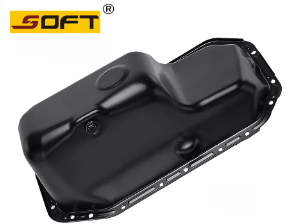
A leaking Oil Pan presents a frustrating dilemma for any driver. You can choose to ignore it and risk catastrophic engine failure down the road. Alternatively, you might face a steep repair bill that escalates quickly if the engine subframe requires dropping. Bottom-of-engine leaks represent a harsh reality of daily driving and component wear. Wind flow during driving often masks the true source of the leak by pushing fluids backward along the undercarriage. This means precise diagnosis serves as the required first step before you commit significant time or capital.
This guide breaks down the evaluation criteria and total cost of ownership (TCO) for various repair methods. We will walk through the technical implementation steps needed to restore the integrity of your engine's lubrication system. You will discover actionable insights to confidently tackle everything from emergency patches to permanent part replacements.
Key Takeaways
Diagnosis Before Disassembly: Verifying the leak source using UV dye prevents misdiagnosing upper-engine leaks (like valve covers) as a faulty oil sump pan.
The "Gold Standard" Repair: Physical gasket or oil pan assembly replacement is the only permanent fix, with parts costing minimal amounts but labor scaling heavily based on drivetrain complexity.
Temporary Alternatives Carry Trade-Offs: External patches and chemical sealants offer low-cost, immediate relief but introduce risks of shortened longevity or internal oil-passage clogs.
Tightening Can Be a Trap: While snugging loose bolts is a valid first check, over-torquing can crush gaskets and worsen the leak.

Verifying the Source: Is It Actually the Engine Oil Pan?
Spending 30 minutes on a proper diagnosis saves hundreds of dollars in unnecessary parts and labor. Many vehicle owners rush into buying replacement gaskets only to discover the new parts do not solve their dripping issue. You must isolate the true origin of the fluid loss before turning a single wrench.
You must constantly watch out for the "wind blow-back" false positive. Oil from a leaking crankshaft seal, a failing timing cover, or a degraded valve cover travels downward due to gravity. As you drive, highway wind pushes this fluid backward along the Engine oil pan. Fluid pools at the lowest point, making it look exactly like a bottom-end gasket failure.
The Diagnostic Framework
Follow this three-step professional diagnostic framework to confirm you actually have a failing Oil sump pan.
Step 1: The Clean Slate. You cannot diagnose a leak on a filthy engine block. Degrease the entire underbody. Use heavy-duty brake cleaner and a wire brush to strip away years of accumulated sludge. Wipe the mating surfaces completely dry. This creates a baseline for accurate observation.
Step 2: The Bolt Check. Verify factory torque specifications. Oil sump bolts naturally loosen over time through constant engine vibration. Snugging them up slightly often stops minor seeps. However, beware the danger of over-tightening. Applying too much torque crushes the fragile gasket material and guarantees a much worse leak.
Step 3: UV Dye Testing. Add a bottle of automotive fluorescent dye directly into your engine. Drive the vehicle for roughly 15 miles. Park in a dark garage and illuminate the undercarriage using a UV blacklight. The glowing trail will pinpoint the exact origin of the Pan-Oil leak, eliminating all guesswork.
The Permanent Fix: Replacing the Oil Pan Assembly & Gasket
Physical hard part replacement stands as the only definitive solution category. It eliminates the problem entirely rather than masking it. However, the total cost of ownership (TCO) and labor involvement vary wildly depending on your specific vehicle architecture.
TCO & Cost Drivers
For DIY mechanics, the raw material cost remains incredibly low. You generally spend between $30 and $100 for a high-quality rubber gasket, a tube of sealant, a fresh filter, and premium fluid. The actual risk lies within professional labor rates and drivetrain complexity.
Front-wheel-drive four-cylinder engines usually offer straightforward access. Conversely, V6 engines or 4WD vehicles present massive clearance hurdles. Professional technicians often need to drop the subframe, detach steering racks, or lower the front differential just to access hidden bolts. These intensive teardowns easily push professional shop costs over the $1,000 mark.
Cost Comparison Chart
Repair Approach | Parts Cost (Avg) | Labor Cost (Avg) | Total Estimated Cost | Best For |
DIY (4-Cyl FWD) | $40 - $80 | $0 (Sweat Equity) | $40 - $80 | Budget-conscious owners with basic hand tools. |
Pro Shop (4-Cyl FWD) | $60 - $120 | $200 - $400 | $260 - $520 | Standard commuter cars requiring fast turnaround. |
Pro Shop (V6 / 4WD / AWD) | $80 - $150 | $800 - $1,200+ | $880 - $1,350+ | Complex drivetrains requiring subframe drops. |
Implementation Protocol (Standard Operating Procedure)
If you choose to tackle the replacement yourself, strictly adhere to this implementation protocol.
Preparation & Draining: Safely lift the vehicle using jack stands. Never rely on a hydraulic jack alone. Remove the drain plug and fully empty the old fluid into a catch basin.
Clearance: Inspect the perimeter. Remove structural crossmembers, exhaust pipes, or splash shields blocking the Oil pan assembly. Keep fasteners organized in labeled bags.
Removal & Surface Prep: Carefully drop the pan. Do not pry aggressively with screwdrivers, as aluminum surfaces gouge easily. Scrape all old gasket material away using a plastic scraper. Crucial Expert Note: Any residual fluid or old sealant left behind will cause the new gasket to fail instantly. Wipe the mating surfaces with solvent until they are perfectly bare.
Installation Logic: Apply a continuous, thin bead of "Sensor Safe" RTV silicone if your manufacturer specifies it. Lift the pan into place. Hand-thread all fasteners first. Finally, tighten bolts in a strict crisscross pattern using a calibrated torque wrench. This prevents warping the delicate metal flange.
Chemical Stop-Leak Additives: Evaluation and Risks
Chemical stop-leak products fall into the internal chemical repair category. You pour these thick additives directly into the crankcase alongside your regular fluid. They circulate through the engine block under high heat and pressure.
How It Works
These specialized formulas contain plasticizers and petroleum distillates. They chemically interact with aging rubber, cork, or neoprene seals. The chemicals swell and soften hardened gaskets. This expands the material back to its original factory dimensions, effectively plugging microscopic gaps.
Evaluation Criteria & Skepticism
You must weigh the pros and cons before pouring chemicals into a complex modern engine.
Pros: They require zero labor. They scale beautifully for managers overseeing aging fleet vehicles. They provide an immediate, low-cost band-aid for minor seeps.
Cons: They completely fail against physical damage. Additives will not fix cracked aluminum housings. They cannot bridge severely torn or missing gasket sections.
Trustworthiness Check: The Mechanic Consensus
Professional mechanics maintain a healthy skepticism regarding these products. Heavy reliance on "stop leak" fluids introduces hidden dangers. Modern engines utilize incredibly tight tolerances. Aggressive swelling agents can alter fluid viscosity. Furthermore, the thick consistency sometimes clumps inside the narrow oil galleys. This gums up variable valve timing (VVT) solenoids and restricts critical lubrication channels. Treat chemical sealants strictly as a bridging solution to buy time, not a permanent mechanical fix.
Emergency External Patching: When You Can't Drop the Pan
External physical patching serves as a hack or emergency fix. You deploy this strategy when standard repairs become impossible.
Use Case Context
This method proves ideal for cracked aluminum housings caused by striking road debris. It also helps in strict residential areas where HOA rules heavily penalize driveway drips. Sometimes you just need to get the vehicle home safely, and a multi-day subframe teardown simply isn't feasible.
The "Microsurface & Isolation" Methodology
Slapping standard glue over a wet leak always fails. You must follow the isolation methodology to achieve a watertight seal.
The Contamination Rule: Silicone and epoxies instantly fail if they touch liquid fluid. The chemicals cannot cross-link and bond to metal if a microscopic layer of grease remains. You must accept this rule before starting.
Surface Scoring: Spray the area repeatedly with brake cleaner. Sand the crack aggressively with coarse sandpaper. This creates a rough microsurface, giving the epoxy something to physically grip.
The Isolation Trick: You cannot stop gravity from pushing fluid out of a crack while glue dries. Therefore, you must isolate it. Take an elevated metal washer or a coin. Coat the outer edge with quick-setting steel epoxy. Press it directly over the crack. Leave the center hollow. The fluid will seep into the hollow center of the washer, leaving the outer perimeter completely dry for the epoxy to cure.
Final Sealing: Once the rigid epoxy cures and traps the seepage, encapsulate the entire patch. Apply a thick layer of high-temp, sensor-safe RTV silicone over the dried, isolated barrier.
Longevity Expectation: Frame this strictly as a temporary stabilization measure. It holds fluid back effectively so you can drive to a professional facility without starving the engine of lubrication. Expect it to last weeks, not years.
Decision Framework: Choosing Your Repair Path
Faced with different methodologies, you need clear shortlisting logic. Assess your vehicle's current value, your mechanical capability, and the severity of the fluid loss. Use the decision matrix below to determine your next steps.
Repair Strategy | Choose This Path If... | Avoid This Path If... |
Gasket Replacement | The vehicle is a long-term investment. You have clear access underneath. The leak causes rapid starvation. | You lack tools, time, and cannot afford a $1,000+ subframe drop. |
External Patching | You suffered a localized impact crack from road debris. You need to get the vehicle home or to a shop safely. | The entire perimeter gasket is actively blowing out fluid. |
Stop-Leak Additives | The vehicle nears the end of its lifecycle. The leak is a microscopic seep. Repair costs exceed total asset value. | You drive a modern, high-tolerance engine with sensitive VVT solenoids. |
Every option carries specific trade-offs. Balance your immediate budget constraints against the long-term health of your vehicle.
Conclusion
Restoring the integrity of your engine's lubrication system prevents catastrophic friction damage. An underbody leak remains a manageable issue when diagnosed accurately. Do not rush into buying parts before confirming the true origin point.
Start your troubleshooting with a thorough underbody degreasing and a simple torque check.
Use UV fluorescent dye to rule out false positives caused by wind blow-back.
Evaluate your physical toolset and vehicle clearance carefully. Decide if you can genuinely handle a DIY teardown.
Treat chemical additives and external epoxy patches as temporary bridges, acknowledging their limitations.
Take action today by cleaning your engine block and scheduling a weekend inspection. Ignoring the drip on your driveway only guarantees a much larger repair bill in the future.
FAQ
Q: Is it safe to drive with a leaking oil pan?
A: Yes, but only if the leak manifests as a minor seep and you monitor fluid levels daily. Major leaks risk rapid starvation. This leads to irreversible internal friction damage. If you leave puddles on the ground, do not drive the vehicle.
Q: How much does it cost to fix an oil pan gasket leak?
A: DIY parts typically cost under $100. However, professional labor ranges widely from $300 to over $1,000. The massive price variance depends entirely on whether the shop must lift the engine, drop the subframe, or remove drivetrain components to access the bolts.
Q: Can I just tighten the oil pan bolts to stop the leak?
A: Sometimes. Fasteners naturally back out over time due to vibration. However, you must tighten them using a calibrated torque wrench to exact factory specifications. Over-tightening crushes the rubber or cork gasket, which guarantees a permanent and worse blowout.
Q: Why do mechanics advise against oil stop-leak fluids?
A: While they effectively swell hardened seals, aggressive chemicals alter overall viscosity. The thick additives can clump inside modern engines' narrow fluid galleys. This sometimes gums up sensitive variable valve timing (VVT) solenoids. You risk trading a cheap external leak for an expensive internal failure.